Last July, a homeowner in Franklin called us, completely frustrated. Their beautiful gunite pool had become a source of stress. The once-smooth surface was now rough enough to scrape their kids’ feet, and stubborn algae stains had taken root that no amount of scrubbing could remove.
It’s a situation many Nashville-area pool owners eventually face. You’ve invested in a backyard oasis, but over time, the very surface designed to protect it begins to fail, turning relaxation into a constant maintenance battle. We believe your pool should be a source of enjoyment, not a chore. That’s why we’ve put together this complete guide to professional pool plastering, designed to give you clarity and confidence.
You are about to discover the latest durable finishes that stand up to Middle Tennessee’s climate, learn the 5 key signs that your pool needs resurfacing, and gain a clear understanding of what a quality job should cost. From selecting the right aggregate to our meticulous application process, we’ll show you how to restore your pool’s integrity and beauty for the next 15 to 20 years.
Key Takeaways
- Learn why plaster is more than a cosmetic choice-it’s the essential waterproof shield that protects your pool’s underlying structure.
- Discover how different modern finishes, from quartz to pebble, directly impact your pool’s water color and long-term durability.
- Our guide to the professional pool plastering process explains the critical steps that guarantee a flawless, long-lasting bond.
- Understand why the first 28 days of care are crucial for your new plaster, especially when dealing with Middle Tennessee’s unique water chemistry.
What is Pool Plastering and Why is it Critical in Nashville?
Your gunite pool is a centerpiece for family fun and relaxation, but its strength and beauty depend on a crucial, often overlooked, final layer. Pool plaster is the smooth, waterproof finish applied over the rough concrete shell of your pool. It’s the part you see and feel, but its most important job is protecting the structural integrity of your investment. Think of high-quality plaster as the essential, watertight skin of your gunite pool.
Here in Nashville, our pools face unique challenges. The expansive clay soil that defines Middle Tennessee is constantly shifting. It swells with our heavy spring rains and shrinks during dry summer spells, putting immense, continuous pressure on the rigid pool shell. This subtle ground movement, combined with our region’s high humidity which can accelerate chemical reactions in the water, places a heavy burden on your pool’s plaster. That’s why the typical lifespan for pool plaster in the Nashville area is around 10 to 15 years, after which its protective qualities begin to degrade.
Signs Your Pool Needs Resurfacing
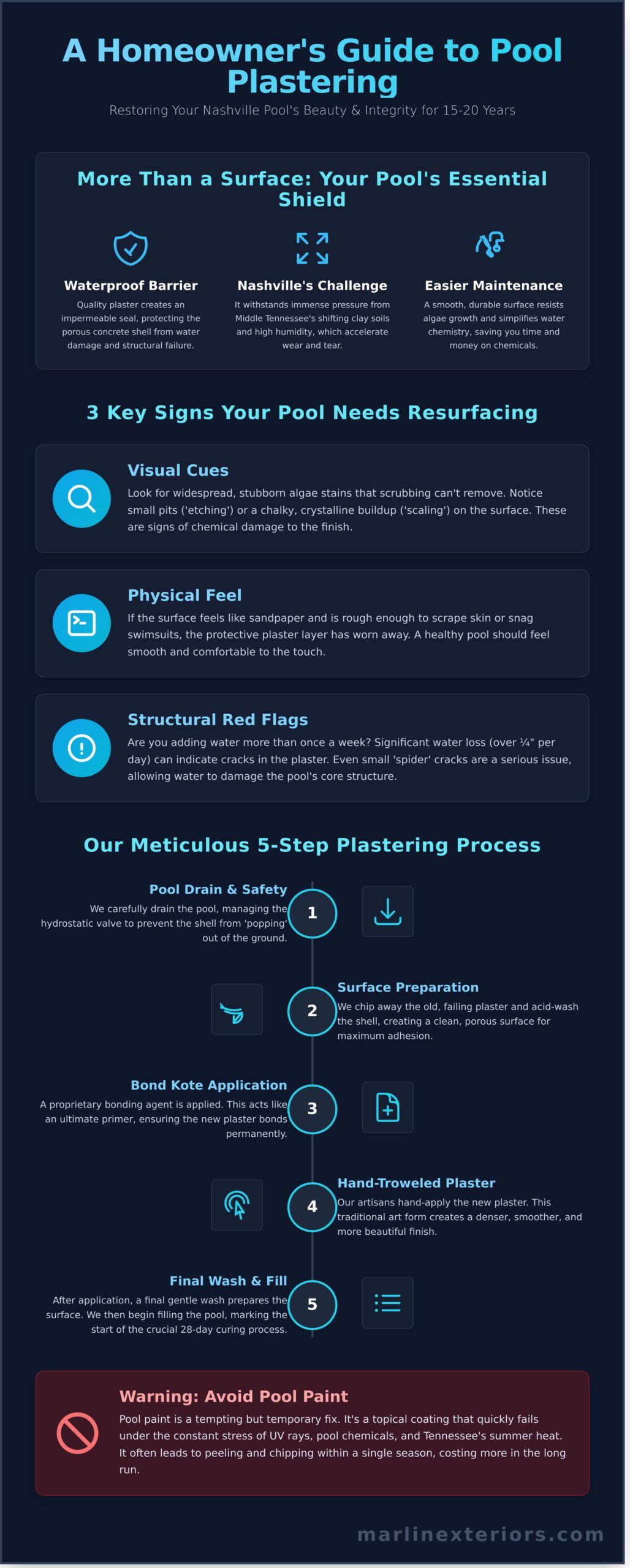
An aging plaster surface isn’t just an aesthetic issue; it’s a warning sign that your pool’s core structure is becoming vulnerable. We encourage homeowners to watch for these clear indicators that it’s time to consider professional resurfacing:
- Visual Cues: Look for widespread staining that regular cleaning won’t remove, or ‘etching,’ which appears as small pits and divots across the surface. Another common issue is scaling, a chalky or crystalline buildup that indicates a chemical imbalance has damaged the finish.
- Physical Cues: If the pool surface feels rough like sandpaper and snags swimsuits or scrapes skin, the plaster has worn away. A smooth, comfortable finish is a hallmark of healthy plaster.
- Structural Red Flags: Are you adding water more than once a week? Significant water loss (more than a quarter-inch per day) can point to cracks in the plaster. Even small ‘spider’ cracks can allow water to penetrate the gunite shell, leading to much larger problems.
The Protective Power of Quality Plaster
The craft of professional pool plastering is about creating an impermeable barrier. While the underlying shell provides the shape and strength in concrete pool construction, the material itself is porous. Without a flawless plaster coat, water can seep into the concrete, eventually reaching the steel rebar that forms its skeleton. This leads to rust, which expands and cracks the gunite from within, causing structural failure that is incredibly expensive to repair.
A durable, properly applied plaster finish also makes your life easier. Its smooth surface resists algae growth and makes balancing your water chemistry simpler and more predictable. This saves you time, reduces chemical costs, and ensures your pool is always a safe, inviting place for your family. Investing in quality resurfacing is a direct investment in the long-term durability and enjoyment of your backyard oasis.
The Pool Plastering Process: What to Expect
We understand that any major project in your backyard can feel disruptive. That’s why we’ve refined our process to be as efficient and predictable as possible. You can trust our team to treat your property with respect, keeping the work area contained and minimizing noise. A complete, professional resurfacing project is not an overnight job; it’s a meticulous craft. For most standard residential pools, the entire process from draining to the final acid wash takes between 3 to 5 days, ensuring each step is completed with precision for a finish that lasts for decades.
Step-by-Step: From Prep to Fill
Our process begins with carefully draining your pool. We manage the hydrostatic pressure relief valve to prevent the rare but serious issue of the pool shell ‘popping’ out of the ground due to water pressure. Once empty, we prepare the surface by chipping away the old, failing plaster and often acid-washing the shell to remove stains and algae. This creates a clean, porous surface, which is critical for the next step: applying a proprietary bond kote. This bonding agent acts as the ultimate primer, ensuring the new plaster adheres permanently to the gunite shell. Finally, our skilled artisans apply the new plaster entirely by hand. This hand-troweling technique is an art form that allows for a denser, smoother, and more beautiful finish than any machine can replicate.
Why Pool Paint is a Short-Term Mistake
It’s tempting to consider pool paint as a quick, cheap fix. We see it often. Unfortunately, it’s an investment that fails quickly. Pool paint is simply a topical coating that isn’t designed to withstand the intense conditions inside a pool, especially with Tennessee’s summer heat often exceeding 90°F. The combination of intense UV exposure and the constant need to maintain proper water chemistry causes paint to blister, chalk, and peel within just 2 to 3 seasons. Worse, paint can act as a bandage, hiding hairline cracks and other structural issues. Water seeps into these hidden cracks, leading to more significant damage to the pool’s shell over time.
Consider the long-term cost. A paint job might cost $2,500, but you’ll be redoing it every 3 years. That’s over $8,000 in a decade, without addressing any underlying problems. A professional pool plastering application is a structural solution designed to last 15 to 20 years, offering a far superior return on investment and protecting the value of your home. While the 3-5 day process is standard for most projects, every pool has its own unique needs; feel free to get a precise timeline for your project from our local experts.
Choosing the Right Finish: Traditional vs. Aggregate
Selecting the right surface for your gunite pool is the most exciting step in the pool plastering process. This choice dictates not just the color of your water but also the texture underfoot and, most importantly, how long your investment will last. Your pool’s finish is the final layer of craftsmanship, the part you see and feel every time you take a dip. We’ll walk you through the three main categories so you can make a confident decision for your Nashville home.
The finish you choose directly impacts the water’s appearance. A classic white plaster will give you a bright, sky-blue reflection, while a darker aggregate can create the deep, rich tones of a natural lagoon. It’s all about the aesthetic you want for your backyard oasis.
Standard White Plaster and Quartz
Traditional white plaster, also known as marcite, is the timeless standard. For decades, it has provided that classic, brilliant blue swimming pool look. It’s the most affordable option upfront, making it an attractive choice for many homeowners. However, its porous nature makes it more susceptible to staining and requires diligent water chemistry to prevent etching. In the Nashville area, with our seasonal temperature swings, a standard plaster finish typically has a lifespan of 5 to 10 years.
For homeowners seeking a significant upgrade in durability without a major price jump, a quartz-enhanced finish is an excellent solution. This material blends traditional plaster with small quartz crystals, creating a much harder and less porous surface. The durability of any finish depends on expert installation, which is why we follow the precise technical guidelines recommended by the National Plasterers Council. Quartz additives increase UV resistance, protecting the color, and boost the lifespan to between 10 and 15 years. It’s no surprise this balanced blend of strength and beauty is a popular mid-range choice for homes throughout Franklin and Brentwood.
Pebble and Aggregate Finishes
The “pebble” revolution introduced the ultimate in durability and natural aesthetics to the pool plastering industry. These premium finishes consist of a cement base mixed with small, polished river pebbles, creating a surface that is incredibly tough and resistant to chemical imbalances. Because the surface has a varied texture and a mix of colors, it does a fantastic job of hiding small debris or minor stains that would be glaringly obvious on a white surface. This provides homeowners with greater peace of mind and a more forgiving finish.
Beyond its strength, the visual appeal is a major draw. You can achieve stunning, multi-toned water colors, from a sandy beach turquoise to a deep ocean blue. While the texture is more pronounced than plaster, it provides excellent slip resistance on steps and benches. Modern pebble finishes use smaller, smoother stones to ensure comfort. With proper care and professional installation, a high-quality pebble finish can last 20 years or more, delivering unmatched long-term value.
Curing and Maintenance in the Tennessee Climate
Your new pool surface is a significant investment in your home’s value and your family’s enjoyment. Protecting that investment starts the moment we finish the plaster application. The first 28 days, known as the start-up period, are the most critical for the plaster’s long-term durability and appearance. Here in Middle Tennessee, our unique climate presents specific challenges, from intense summer humidity to unpredictable winter freezes, that demand a precise approach to curing and care.
Nashville’s summer humidity, which regularly tops 70% from June through August, actually helps the plaster cure by slowing surface evaporation. This promotes a stronger, more evenly hydrated finish. However, it also means that diligent brushing and chemical management are non-negotiable to prevent mottling and staining. A proper start-up ensures your beautiful new finish lasts for the next 15-20 years.
The 28-Day Start-Up Routine
Think of this as the foundation for decades of fun. We provide every client with a detailed checklist, but the core principles are straightforward. You must brush the entire surface with a pool brush 2-3 times daily for the first 10 days to remove fine plaster dust. This dust, if left alone, can harden into rough spots or stains. After day 10, daily brushing for the remainder of the 28 days is sufficient. It’s also vital to manage water chemistry from day one, especially with Middle Tennessee’s typically hard tap water. Your goal is to keep pH between 7.4-7.6 and Total Alkalinity between 80-120 ppm to prevent scaling. Lastly, hold off on turning on your pool heater or salt chlorine generator for at least 28 days to allow the plaster to achieve its maximum hardness without interference.
Cost Expectations for Nashville Pool Plastering
A professional pool plastering job is one of the best ways to boost your property’s appeal. For 2026, homeowners in the Nashville area can expect the following price ranges for an average 15,000-gallon pool:
- Standard White Plaster: $7,500 – $11,000
- Upgraded Aggregate Finishes (Pebble/Quartz): $12,000 – $20,000+
Several factors can increase the final cost. Extensive repairs to the underlying gunite shell, significant plumbing updates, or replacing the waterline tile can add $2,000 to $5,000 or more to the project. However, the return on this investment is substantial. A 2024 analysis of home sales in suburbs like Mt. Juliet showed that a fully renovated pool can increase a home’s final sale price by as much as 7%. It’s a powerful selling point that buyers notice. Protect your investment with a precise, no-surprise quote. Get your detailed pool plastering estimate today.
For your new plaster’s first winter, never drain the pool completely. The freeze-thaw cycles of our Zone 7 climate can cause severe damage to an empty plastered pool. We recommend maintaining the water level and using a proper winterizing chemical kit to prevent staining and algae growth, ensuring a perfect opening next spring.
Why Marlin Exteriors is Your Trusted Plastering Partner
Choosing a contractor for your pool renovation is a major decision. You’re not just buying a new surface; you’re investing in your home’s value and your family’s enjoyment for years to come. At Marlin Exteriors, Inc., we’ve spent more than 20 years earning the trust of homeowners across Middle Tennessee by delivering exceptional craftsmanship and neighborly service. We live here, we work here, and we understand that our reputation is built one successful project at a time.
That commitment starts with transparent communication. When you work with us, you have a direct line to your project manager. No call centers, no runaround. Just clear answers and consistent updates. This philosophy is at the core of what we call the ‘Marlin Standard,’ a non-negotiable commitment to quality that begins long before the first batch of plaster is mixed. While some contractors rush through preparation to lower their bids, we know that the longevity of a plaster finish is determined by the work done beforehand. We don’t cut corners.
Our meticulous prep work includes:
- Thorough Surface Evaluation: We sound the entire pool shell to identify and repair any hollow spots or delamination.
- Precision Undercutting: We cut a deep, clean edge below the tile line and around all fittings to create a secure lock for the new plaster.
- Superior Acid Etching: Our team properly power washes and acid etches the surface to create the ideal texture for a permanent bond, ensuring your new finish lasts.
This uncompromising approach to preparation is the single most important factor in a successful pool plastering project. It’s how we protect your investment and deliver a beautiful, durable finish that stands the test of time.
Local Expertise You Can Count On
For over two decades, we’ve worked on pools from Lebanon to Franklin, giving us an unmatched understanding of how Middle Tennessee’s expansive clay soil and freeze-thaw cycles affect gunite structures. This local knowledge allows us to anticipate challenges and implement solutions that national chains might overlook. Our project managers are your neighbors, dedicated to ensuring your project runs smoothly from start to finish.
Start Your Backyard Transformation
Your journey begins with a comprehensive, on-site assessment. A Marlin Exteriors, Inc. specialist will meet you at your home to carefully inspect your existing plaster, check for structural issues, and discuss your vision for the space. We operate under our ‘Protect What Matters Most’ guarantee, which means we treat your property with absolute respect. We use protective coverings for decking and landscaping and ensure the job site is clean and secure every single day. It’s time to restore your pool to its former glory. Schedule your professional pool plastering assessment today.
Secure Your Pool’s Future with Expert Craftsmanship
Your gunite pool is a significant investment, and its plaster is the key to protecting that value for decades. Choosing the right finish and ensuring a proper cure aren’t just details; they are essential for withstanding the Tennessee climate and preventing costly structural damage. It’s about combining durability with beauty to create a backyard oasis you can rely on, season after season.
You don’t have to navigate this process alone. At Marlin Exteriors, our family-owned team brings over 20 years of local experience specializing in gunite pool restoration right here in the Nashville area. We approach every pool plastering project with the integrity and precision your home deserves because we’re committed to protecting what matters most to our community.
Ready to restore your pool’s beauty and strength? Request Your Free Pool Plastering Quote today. Let’s get your pool ready for a lifetime of summer memories.
Frequently Asked Questions About Pool Plastering
How much does pool plastering cost in Nashville, TN?
Pool plastering in the Nashville area typically costs between $6,500 and $10,000 for an average-sized residential pool of 15,000 gallons. The final price is influenced by the pool’s size, the condition of the existing surface, and your chosen finish. For instance, a premium pebble finish can increase the cost by 20-30% over standard white plaster. We provide a detailed, transparent quote upfront so you know exactly what your investment will be, ensuring no surprises.
How long does the pool plastering process take from start to finish?
The entire pool plastering process typically takes 5 to 7 days from the initial draining to the final fill-up. Day one involves draining and preparing the surface. The plaster application occurs on day two or three, which requires 4-6 hours of skilled work from our crew. The new plaster must then cure for at least 24 hours before we begin refilling the pool. We manage every step with precision to minimize disruption and get your family swimming again.
Can I stay in my house while the pool is being replastered?
Yes, you can absolutely stay in your home during the entire replastering process. Our professional crew works exclusively in your backyard, and the equipment noise is comparable to that of a standard landscaping project. We take great care to maintain a clean and organized job site, respecting your property and privacy. Your daily routine should experience minimal disruption while we work to restore the heart of your backyard.
What is the best time of year to plaster a pool in Middle Tennessee?
The ideal time for pool plastering in Middle Tennessee is during the spring or fall when daily temperatures are consistently between 50 and 80 degrees Fahrenheit. These moderate conditions are perfect for the plaster to cure properly without drying too quickly, which can cause cracks. Plastering in the extreme heat of July or during freezing winter days can compromise the finish’s long-term integrity. We schedule projects during these optimal seasons to ensure a durable, beautiful result.
Is it better to use pebble or smooth plaster for a family pool?
For most families, a pebble finish is the superior choice due to its exceptional durability and naturally slip-resistant texture. While traditional smooth plaster offers a classic look, it’s more susceptible to staining and typically requires replastering every 7-10 years. A quality pebble aggregate surface can last over 20 years and provides a safer, more comfortable grip for feet of all sizes. It’s a smart long-term investment in your family’s safety and enjoyment.
How often should a gunite pool be replastered?
A gunite pool with a standard white plaster finish should be replastered approximately every 7 to 10 years. Over the years, you’ll notice signs of wear like staining, etching, or roughness on the surface. Upgrading to a more durable aggregate finish, such as a pebble or quartz blend, can extend this lifespan significantly to 15-20 years or more. Maintaining proper water chemistry is also crucial for maximizing the life of any plaster surface. If you’re considering a complete pool renovation or building a new pool, exploring custom gunite pool designs in Franklin TN can help you create the perfect backyard retreat that combines modern aesthetics with long-lasting durability. For homeowners interested in understanding the complete construction process from start to finish, learning about the gunite pool construction process provides valuable insight into how these durable pools are built to withstand Middle Tennessee’s unique soil and climate conditions.
Does pool plastering come with a warranty?
Yes, all of our professional pool plastering projects come with a comprehensive warranty that covers both materials and craftsmanship. We stand behind our work with a 5-year warranty on our standard plaster applications and up to a 10-year manufacturer’s warranty on premium aggregate finishes. This protects your investment against defects like delamination or material failure. Our warranty is our promise of quality and your peace of mind.
Can I change the color of my pool during the plastering process?
Absolutely. The replastering process is the perfect opportunity to update your pool’s appearance by changing its color. The plaster finish itself determines the water’s hue, and we offer a wide range of options from brilliant blues and grays to sandy tans. A darker plaster can create a dramatic, lagoon-like effect, while a light blue or white finish provides that classic, sparkling look. We can show you physical samples to help you achieve the exact backyard aesthetic you envision.