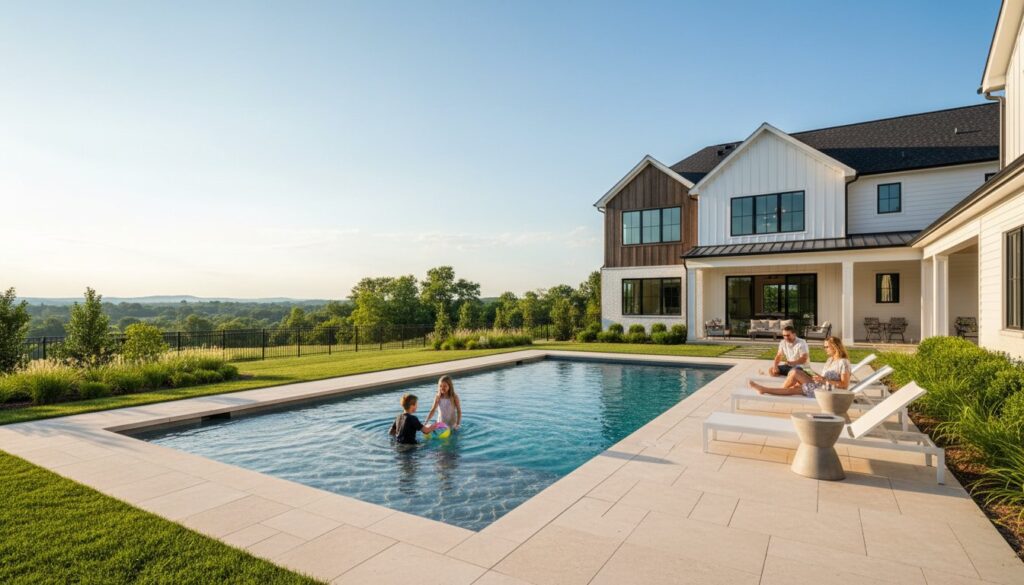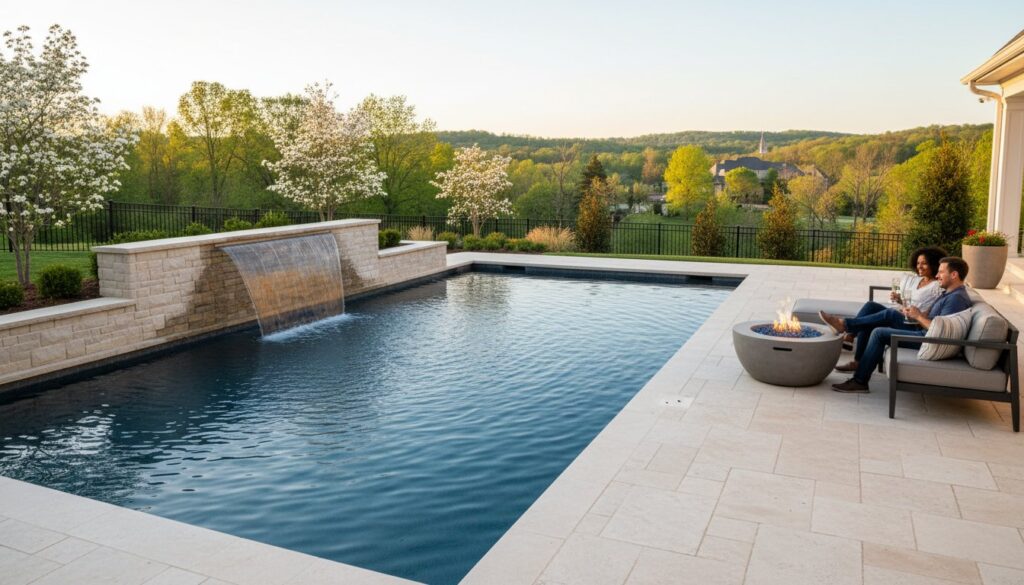
What if the pool of your dreams could become your biggest home maintenance nightmare? While gunite pools dominate Nashville’s luxury home market, representing over 70% of custom pool installations according to the National Association of Home Builders, they come with hidden challenges that can catch homeowners off guard.
We understand you’re considering a significant investment in your property, and making the right choice means looking beyond the glossy marketing brochures. The truth is, gunite pool cons include substantial ongoing maintenance costs, construction timelines that can stretch 3-4 months longer than expected, and the real possibility of costly crack repairs within the first decade of ownership.
This article will walk you through the specific downsides of gunite pools that Nashville homeowners face, from the initial construction disruption to long-term durability concerns. You’ll discover the maintenance realities, understand potential structural issues, and gain the honest perspective you need to determine if a gunite pool truly fits your family’s long-term plans and budget.
Key Takeaways
- Understanding common gunite pool cons like cracking and surface wear helps Nashville homeowners make informed decisions about their pool investment.
- Maintenance costs for gunite pools typically run higher than vinyl or fiberglass alternatives, impacting your long-term budget planning.
- Practical solutions exist to mitigate most gunite pool issues, protecting your investment and extending pool lifespan.
- Alternative construction methods and materials can address specific concerns while maintaining the durability gunite pools are known for.
- Weighing gunite pool advantages against potential drawbacks ensures you choose the right pool type for your Nashville home’s unique needs.
Why Consider Gunite Pools in Nashville?
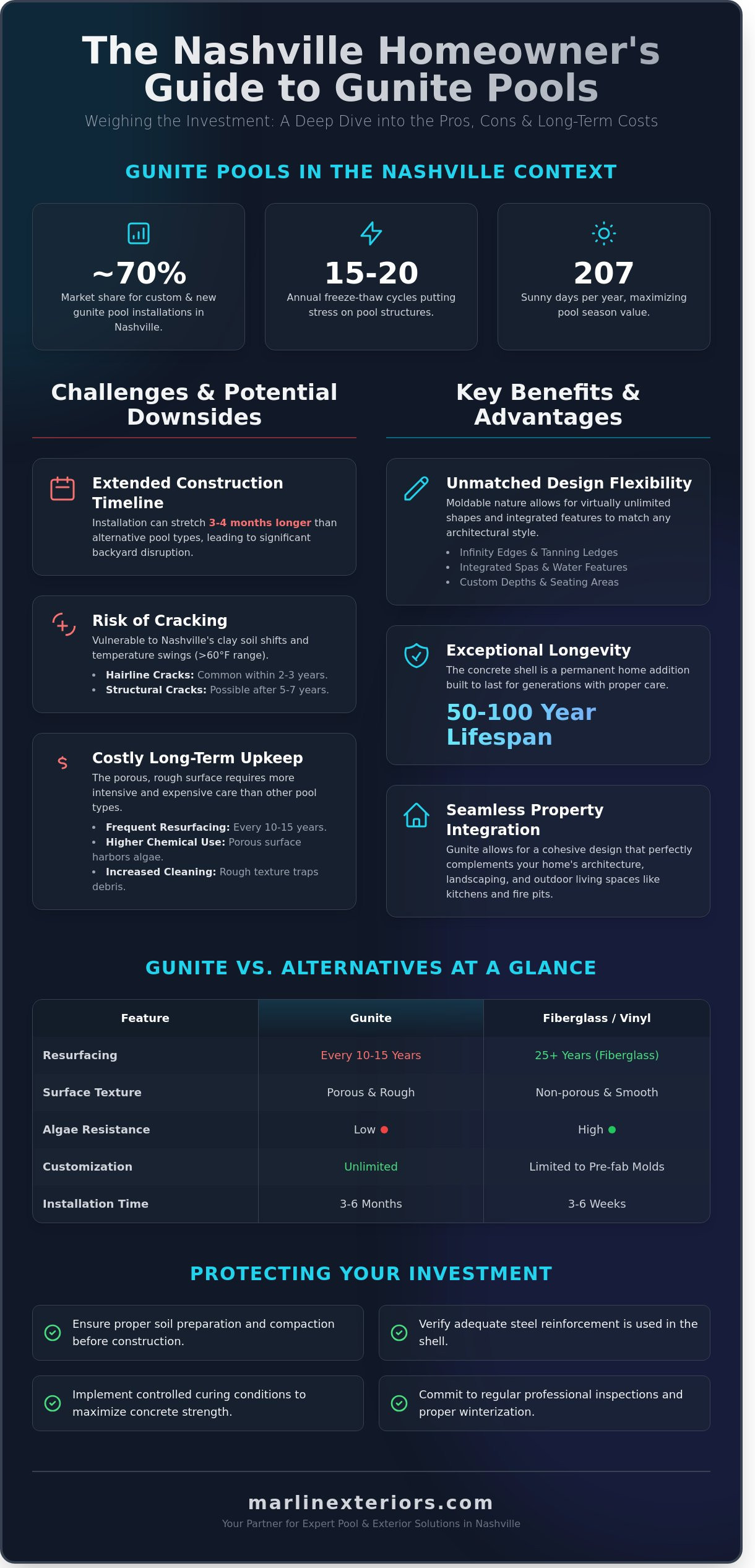
Gunite pools have become the gold standard for Nashville homeowners seeking a permanent backyard oasis. These concrete structures, created by spraying a mixture of cement, sand, and water over a steel framework, offer unmatched flexibility in design and construction. In Middle Tennessee’s growing luxury home market, gunite pools represent 68% of all new pool installations, according to the Pool and Hot Tub Alliance’s 2023 regional data.
Nashville’s climate presents unique opportunities for gunite pool ownership. The city enjoys approximately 207 sunny days per year, making pools a valuable investment for extended seasonal use. However, understanding gunite pool cons becomes crucial when considering Nashville’s temperature fluctuations, which can range from freezing winters to sweltering summers exceeding 90°F.
Local homeowners gravitate toward gunite pools for their ability to complement Nashville’s diverse architectural styles, from historic Belle Meade estates to modern Green Hills developments. The customization potential allows pools to integrate seamlessly with existing landscaping and home designs. When planning your pool project, consulting with Expert Pool Builders in Nashville ensures you understand both benefits and potential challenges.
Customization: The Key Attraction
Gunite’s moldable nature enables virtually unlimited design possibilities. Popular Nashville customization options include infinity edges overlooking rolling hills, integrated spas for year-round use, and custom depth variations accommodating both lap swimming and family recreation. Homeowners frequently incorporate natural stone coping, LED lighting systems, and built-in seating areas that reflect Tennessee’s outdoor living culture.
The aesthetic appeal extends beyond the pool itself. Gunite allows for seamless integration with outdoor kitchens, fire features, and entertainment areas that define Nashville’s hospitality-focused lifestyle.
Durability and Longevity
Gunite pools typically last 50-100 years when properly maintained, making them a long-term investment in your property. The concrete shell withstands Nashville’s clay soil conditions better than fiberglass alternatives, which can shift during the region’s wet springs and dry summers.
However, Nashville’s freeze-thaw cycles can impact gunite durability. The concrete’s porous nature requires regular resurfacing every 10-15 years, and proper winterization becomes essential to prevent cracking. Understanding these gunite pool cons helps homeowners budget for long-term maintenance and ensure their investment maintains its value and functionality.
Common Issues with Gunite Pools
While gunite pools offer durability and customization options, they come with specific challenges that Nashville homeowners need to understand before making this significant investment. These gunite pool cons can impact both your wallet and your enjoyment of your backyard oasis.
The most common problems include structural cracking, surface deterioration, and ongoing maintenance demands. Unlike fiberglass pools that arrive as a single unit, gunite pools are constructed on-site using a spray-applied concrete mixture. This construction method, while allowing for custom shapes, creates vulnerabilities that become apparent over time.
Nashville’s climate compounds these issues significantly. The region experiences approximately 15-20 freeze-thaw cycles annually, which puts tremendous stress on concrete structures. Summer temperatures regularly exceed 85°F, while winter lows can drop below 25°F. This 60-degree temperature swing causes gunite to expand and contract repeatedly, accelerating wear and potential damage.
Understanding these challenges upfront helps you make an informed decision. For detailed guidance on proper installation techniques that can minimize some of these issues, review our comprehensive Gunite Pool Installation Guide.
Cracking and Structural Concerns
Gunite pools develop cracks due to ground movement, improper curing, and thermal expansion. Nashville’s clay-heavy soil shifts during wet and dry seasons, creating uneven pressure on pool walls. Hairline cracks typically appear within the first 2-3 years, while structural cracks may develop after 5-7 years without proper maintenance.
Prevent cracking by ensuring proper soil preparation, adequate steel reinforcement, and controlled curing conditions during construction. Regular inspections help catch minor issues before they become major structural problems.
Surface Maintenance Challenges
Gunite pool surfaces require resurfacing every 10-15 years, compared to fiberglass pools that can last 25+ years without major surface work. The rough texture of gunite attracts algae and stains more readily than smooth surfaces. Local pool service companies report that 40% of their service calls involve surface-related issues like discoloration, roughness, or plaster deterioration.
Weekly brushing becomes essential to prevent algae buildup in the porous surface. Chemical balancing requires more precision since improper pH levels can etch the plaster permanently.
Before committing to a gunite pool, consider consulting with experienced local contractors who understand Nashville’s unique environmental challenges and can provide realistic maintenance expectations for your specific situation.
Understanding Maintenance Costs
One of the most significant gunite pool cons involves the ongoing financial commitment required to keep your pool in pristine condition. Unlike their vinyl and fiberglass counterparts, gunite pools demand more intensive maintenance due to their porous concrete surface and complex plumbing systems.
Weekly chemical balancing costs typically run $30-50 per month for gunite pools, compared to $20-35 for vinyl pools. The rough concrete surface harbors algae more readily, requiring stronger chemicals and more frequent treatments. Professional cleaning services charge $80-120 monthly in Nashville, reflecting the additional scrubbing needed for gunite surfaces.
Equipment maintenance presents another substantial expense. Pool pumps, filters, and heaters work harder with gunite pools due to the circulation demands of their complex designs. Expect to replace major equipment every 8-12 years, with costs ranging from $1,500-3,000 per component.
When comparing pool types, gunite maintenance costs average 40-60% higher than fiberglass pools annually. While vinyl pools require liner replacement every 8-10 years ($3,000-5,000), gunite pools need complete resurfacing every 10-15 years at $6,000-12,000. This represents one of the primary gunite pool cons that catches homeowners off-guard.
For detailed construction costs and budgeting considerations, review our comprehensive 2026 Cost to Build a Pool in Nashville guide.
Routine Maintenance Expenses
Nashville’s climate creates unique challenges for gunite pool owners. Winter freeze-thaw cycles can crack concrete surfaces, leading to $500-1,500 repair bills. Spring startup costs average $200-400 due to extensive cleaning and chemical rebalancing needed after Tennessee’s unpredictable weather patterns.
Smart homeowners reduce costs by learning basic chemical testing ($150 annual savings) and investing in automated systems ($2,000-4,000 upfront, saving $600-900 yearly in service calls).
Long-term Resurfacing and Repair Costs
Gunite pools require resurfacing every 10-15 years as the concrete surface deteriorates from chemical exposure and weather. Standard plaster resurfacing costs $6,000-8,000, while premium finishes like pebble or quartz reach $10,000-15,000.
Solutions and Alternatives to Common Cons
While gunite pool cons can seem daunting, experienced contractors have developed proven strategies to minimize these challenges. The key lies in proactive planning, quality construction techniques, and understanding when alternative materials might better serve your needs.
Smart homeowners don’t just accept these limitations. They work with knowledgeable professionals who implement specific solutions from day one. Professional maintenance services can extend your pool’s lifespan by 15-20 years when properly executed, transforming potential headaches into manageable routine care.
Preventing and Fixing Cracks
Control joints represent your first line of defense against structural cracks. These intentional weak points, placed every 10-12 feet during construction, direct natural settling forces away from random locations. Quality contractors also incorporate flexible sealants and expansion materials at key stress points.
Annual inspections catch hairline cracks before they become expensive repairs. Professional assessments in early spring identify winter damage when fixes cost hundreds rather than thousands. Choose contractors with documented gunite experience spanning at least a decade.
Improving Surface Longevity
Proper chemical balance prevents 80% of surface deterioration issues. Weekly pH testing and monthly alkalinity checks protect your plaster investment. Automated chemical systems maintain consistent levels, reducing manual monitoring to quarterly professional adjustments.
Modern resurfacing technologies offer superior durability compared to traditional plaster. Pebble finishes last 12-15 years versus 7-10 years for standard surfaces. Quartz aggregates provide enhanced stain resistance while maintaining the classic gunite aesthetic homeowners prefer.
For Tennessee homeowners concerned about ongoing gunite pool cons, vinyl liner pools in Tennessee offer compelling alternatives. These systems eliminate cracking concerns while providing customizable designs and significantly lower maintenance requirements.
Professional maintenance contracts typically cost $150-200 monthly but prevent major repairs averaging $3,000-5,000 every few years. This proactive approach protects your investment while ensuring consistent water quality and surface integrity.
Ready to explore pool solutions that fit your lifestyle and budget? Contact our experienced team for personalized recommendations based on your specific property conditions and long-term goals.
Making the Right Decision for Your Home
Understanding gunite pool cons is just one piece of the puzzle when deciding whether this pool type fits your home and lifestyle. The high upfront investment, lengthy construction timeline, and ongoing maintenance requirements we’ve discussed must be weighed against your family’s specific needs and long-term goals.
Consider your budget realistically. Beyond the initial construction costs, factor in yearly maintenance expenses, potential repairs, and utility increases. A gunite pool represents a 20-30 year commitment, so think about how your family situation might change over time.
Your property’s characteristics matter significantly. Challenging soil conditions, limited access, or strict HOA regulations can amplify many gunite pool cons, potentially doubling construction timelines or requiring expensive modifications. Local climate also plays a role in determining seasonal usage and heating costs.
Before making any decisions, arm yourself with the right questions. Our comprehensive guide 21 Essential Questions to Ask a Pool Builder helps you evaluate contractors thoroughly and avoid costly mistakes.
Consulting with Local Experts
Local expertise makes the difference between a smooth project and a problematic one. Tennessee’s unique soil conditions, weather patterns, and building codes require specialized knowledge that only experienced local contractors possess.
At Marlin Exteriors, we’ve navigated these challenges for years, understanding exactly how Middle Tennessee’s clay soil affects excavation timelines and costs. We provide honest assessments about potential complications before they become expensive surprises. Schedule a consultation to get realistic timelines and budgets based on your specific property conditions.
Considering Long-term Value and Enjoyment
A well-built gunite pool typically adds 5-8% to your home’s value, but this depends heavily on your neighborhood and local market conditions. More importantly, consider how you’ll actually use the space.
Think about your family’s swimming habits, entertaining style, and future needs. Will teenagers use it for parties? Do you envision quiet evening swims? Your usage patterns should drive design decisions and help justify the investment despite the gunite pool cons.
Remember that gunite’s customization advantages allow for future upgrades. You can add features like spas, water features, or lighting systems years later, spreading costs over time while adapting to changing preferences.
Making Your Nashville Pool Dreams a Reality
Understanding gunite pool cons doesn’t mean abandoning your backyard oasis dreams. Nashville homeowners who recognize potential challenges like higher upfront costs, extended construction timelines, and ongoing maintenance requirements can make informed decisions that protect their investment. The key lies in working with experienced professionals who understand Middle Tennessee’s unique soil conditions and climate patterns.
Smart planning addresses most concerns before they become problems. Proper drainage systems prevent structural issues, while quality construction techniques minimize long-term maintenance headaches. When you partner with contractors who’ve navigated Nashville’s specific challenges for decades, you’re investing in expertise that saves both time and money.
Your backyard deserves the durability and customization that only gunite construction provides. Explore custom gunite pool solutions with Marlin Exteriors and discover how over 20 years of pool construction experience translates into peace of mind for your family. Our local expertise in Middle Tennessee means we understand exactly what it takes to build pools that last.
Ready to transform your outdoor space? Let’s build something extraordinary together.
Frequently Asked Questions
What are the main disadvantages of gunite pools?
The primary gunite pool cons include high initial construction costs, lengthy installation timelines of 8-12 weeks, and ongoing maintenance requirements. Gunite pools also require resurfacing every 10-15 years, which can cost $10,000-$15,000 according to industry data. The porous concrete surface is prone to algae growth and chemical imbalances, demanding more frequent cleaning and chemical adjustments than fiberglass alternatives.
How often do gunite pools need to be resurfaced?
Gunite pools typically require resurfacing every 10-15 years, depending on usage, chemical maintenance, and climate conditions. The plaster finish gradually deteriorates due to chemical exposure and normal wear. Pool industry studies show that pools in harsh climates or those with poor chemical balance may need resurfacing as early as 7-8 years, while well-maintained pools can extend to 18-20 years.
Are gunite pools suitable for all climates?
Gunite pools face significant challenges in freeze-thaw climates, where temperature fluctuations can cause cracking and structural damage. The concrete material expands and contracts with temperature changes, making proper winterization critical in northern regions. Pools in consistently warm climates like Arizona or Florida typically experience fewer structural issues and longer lifespans.
What maintenance is required for gunite pools?
Gunite pools demand weekly chemical testing, brushing the walls 2-3 times per week, and regular vacuuming due to the porous surface that harbors algae. The rough texture requires more aggressive cleaning compared to smooth fiberglass surfaces. Professional maintenance services typically charge $100-$150 monthly, and annual chemical costs average $500-$800 for residential pools.
How long does it take to build a gunite pool?
Gunite pool construction takes 8-12 weeks on average, significantly longer than fiberglass pools which install in 3-5 days. The process includes excavation, steel reinforcement installation, gunite spraying, curing time of 28 days, plumbing, and finishing. Weather delays, permit approvals, and custom features can extend the timeline to 16-20 weeks in some cases.
Can gunite pools be customized with features like waterfalls?
Yes, gunite pools offer unlimited customization options including waterfalls, rock formations, swim-up bars, and custom shapes. The concrete construction allows builders to create virtually any design, from natural lagoon styles to geometric infinity edges. This flexibility represents one of the few advantages that offset the various gunite pool cons, making them popular for luxury installations.
What is the lifespan of a gunite pool compared to fiberglass?
Gunite pools last 50-100 years with proper maintenance, while fiberglass pools typically last 25-30 years before requiring major repairs or replacement. However, gunite pools need resurfacing every 10-15 years and ongoing structural maintenance. Fiberglass pools require minimal maintenance but may need gelcoat refinishing after 15-20 years, costing significantly less than gunite resurfacing.