What if that “budget-friendly” pool quote doesn’t account for the 400 million-year-old limestone sitting just three feet under your Nashville backyard? Most Middle Tennessee homeowners understand that our rocky terrain turns a simple excavation into a precision engineering project. You want a backyard retreat that builds equity, but the fear of hidden maintenance fees or cracked shells in our volatile weather keeps many families on the sidelines. It’s a tough choice when you’re trying to balance immediate curb appeal with long-term financial sanity.
We’ve analyzed current market trends to give you a clear look at the fiberglass vs gunite pool price for 2026. This guide breaks down the total cost of ownership, from the first bucket of dirt moved to the chemical treatments required ten years down the road. You’ll learn how each material handles Tennessee’s freeze-thaw cycles and exactly how long you’ll wait before your first swim. We’re here to help you protect what matters most by ensuring your new pool is a source of lasting value rather than a source of stress.
Key Takeaways
- Distinguish between the initial “sticker price” and the total project cost to ensure your Nashville backyard renovation stays on budget.
- Compare the 20-year fiberglass vs gunite pool price to understand how maintenance and utility costs impact your long-term budget in the Nashville area.
- Discover why gunite is considered the gold standard for custom resorts and how its labor-intensive construction adds precision and durability to your property.
- Learn why pre-engineered fiberglass shells are the fastest-growing pool segment in Mt. Juliet for homeowners seeking a high-quality, efficient installation.
- Align your pool choice with the architectural style of your home to protect your investment and maximize your property’s future resale value.
Understanding Inground Pool Pricing in Nashville and Mt. Juliet
The 2026 pool market in Middle Tennessee reflects a period of high demand and evolving labor costs. Homeowners in Nashville and Mt. Juliet are finding that planning ahead is the best way to protect their investment. When you evaluate the fiberglass vs gunite pool price, it’s vital to distinguish between the base shell cost and the total project completion. A “sticker price” rarely includes the necessary site work, decking, and safety features that make your backyard a sanctuary. We focus on the total project cost to ensure there are no surprises when the water starts flowing.
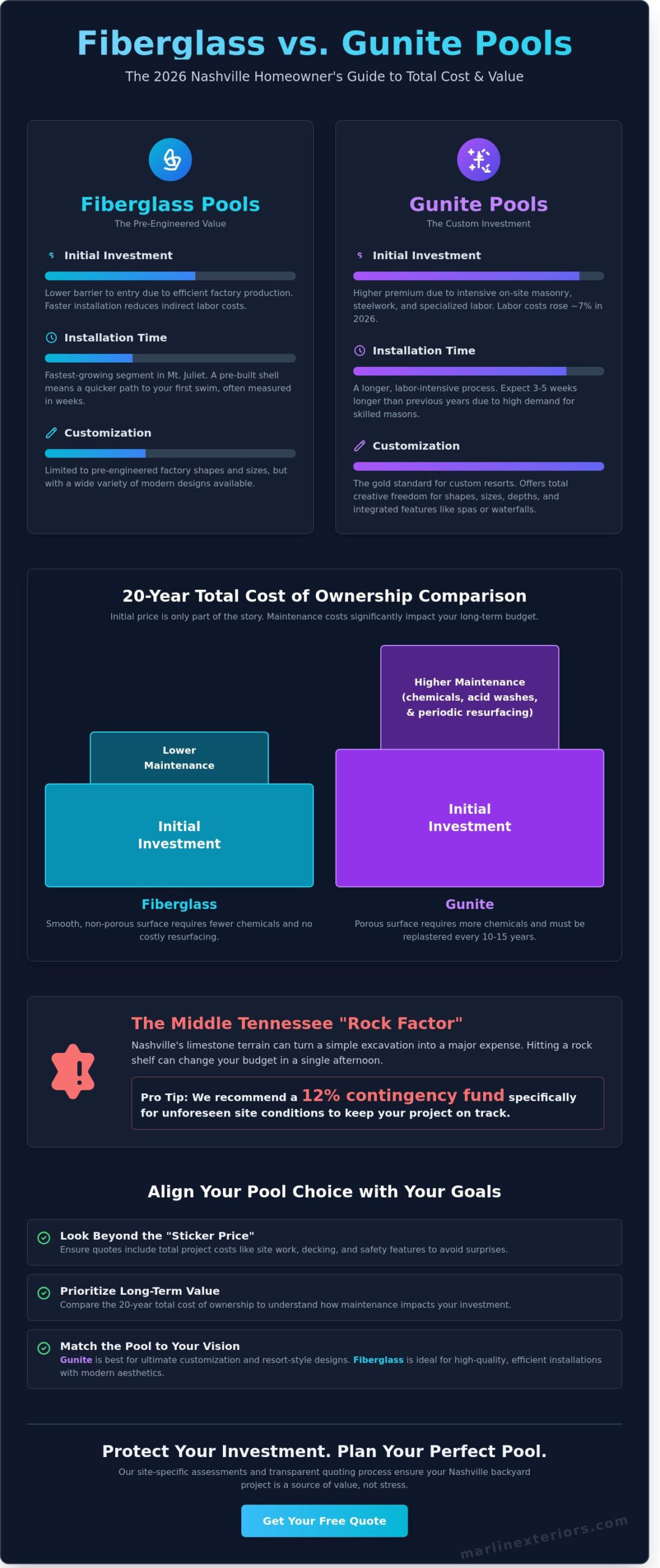
Local labor availability in Franklin and Brentwood continues to dictate project schedules. In 2026, skilled masonry teams are in high demand, which often adds three to five weeks to gunite installations compared to previous years. Swimming pool construction varies based on whether you choose a factory-made fiberglass shell or an on-site gunite build. Fiberglass offers a faster path to your first swim, while gunite provides limitless customization at a higher labor cost. This fundamental difference in how the pools are built is the primary driver of your timeline and your budget.
Initial Investment Ranges for 2026
Entry-level fiberglass pools in the Nashville area typically offer a lower barrier to entry because factory production scales efficiently. When comparing the fiberglass vs gunite pool price in the current market, remember that the speed of a fiberglass install can save you thousands in indirect costs. Gunite demands a higher premium due to the intensive masonry labor required to shoot and finish the concrete. In 2026, labor costs for specialized pool trades in Middle Tennessee have risen by approximately 7 percent. Size and depth remain the biggest variables. Every additional foot of depth requires more excavation, more material, and more structural engineering to ensure the pool lasts for decades.
The Middle Tennessee “Rock Factor”
If you live in Mt. Juliet, you know that limestone is a constant neighbor. Hitting a rock shelf during excavation can change your budget in a single afternoon. Marlin Exteriors performs site-specific soil assessments before we finalize any quote because we believe in transparency. We don’t want you to face surprises during the dig phase. We recommend homeowners budget a 12 percent contingency fund specifically for site conditions. This ensures your project stays on track even if the Nashville terrain proves challenging. Our goal is to provide the peace of mind that your home and your budget are in safe hands throughout the entire process.
The Custom Investment: Breakdown of Gunite Pool Costs
Gunite pools represent the pinnacle of backyard luxury for Middle Tennessee homeowners. Unlike pre-manufactured shells, a gunite pool is built entirely on-site, allowing for total creative freedom. We see families in Franklin and Mount Juliet choosing gunite to create “resort-style” escapes that fit their specific landscape. The construction process is deeply labor-intensive. It begins with a complex steel rebar cage, followed by high-pressure shotcrete application. This creates a monolithic structure that handles Tennessee’s unpredictable freeze-thaw cycles with impressive durability.
The fiberglass vs gunite pool price often reflects this level of site-specific craftsmanship. Gunite requires significantly more man-hours and specialized equipment than a drop-in shell. According to data on Residential Building Costs, concrete pools typically command a higher initial investment than fiberglass due to these on-site construction requirements and shipping factors. For a custom 40,000-gallon build with a zero-entry edge or a specific geometric shape, gunite is the only viable path to achieving that vision.
Customization and Aesthetic Upgrades
Gunite offers a level of artistry that other materials simply cannot match. You can specify the exact depth of a tanning ledge or the precise radius of a built-in bench. High-end finishes like Pebble-Tec or intricate glass tile work add significant value and visual appeal to the project. Integrating a custom spillover spa or a natural rock waterfall requires the structural flexibility that only gunite provides. For a detailed look at the craftsmanship involved in these projects, read our guide on gunite pool installation in Nashville.
Long-Term Maintenance of Gunite
Owning a gunite pool requires a steady commitment to ongoing care. The porous nature of the plaster surface means you will likely consume more chemicals to maintain a stable pH balance compared to a non-porous fiberglass surface. You should also budget for professional resurfacing every 10 to 15 years. This process involves stripping the old finish and applying a fresh layer of plaster or aggregate. Regular maintenance and timely pool renovation in Nashville protect your investment and keep the structure sound for decades. If you are ready to design a custom oasis, we would love to discuss your vision and help you weigh the fiberglass vs gunite pool price for your specific backyard.
The Pre-Engineered Value: Fiberglass Pool Price Factors
Middle Tennessee homeowners are increasingly turning to fiberglass solutions to avoid the long, messy construction timelines often associated with traditional builds. Because these shells are manufactured in a controlled factory environment, they arrive at your Nashville property as a finished product. This pre-engineered approach directly impacts the fiberglass vs gunite pool price by shifting the cost from unpredictable on-site labor to a high-quality, manufactured asset. When you evaluate the Cost Factors for Residential Buildings, it becomes clear that factory-built components offer a level of precision and cost-certainty that site-poured concrete simply cannot match.
Every fiberglass shell includes built-in features that would cost thousands extra in a gunite build. Tanning ledges, bench seating, and non-skid steps are molded directly into the structure. You aren’t paying for extra days of masonry work to add these comforts. We see this as a way to protect your investment from the start, ensuring your backyard remains a sanctuary rather than a perpetual job site. The cost of shipping the shell from the manufacturer to your Nashville home is a factor, but it’s often offset by the drastic reduction in local labor hours required for the install.
Installation Speed and Labor Savings
- Fast-Track Completion: A typical fiberglass installation in a community like Gallatin takes about 14 to 21 days from excavation to swim-ready. In contrast, a gunite project often stretches over 90 days or more.
- Reduced Neighborhood Stress: Shorter timelines mean fewer heavy trucks on your street and less noise for your neighbors.
- Seasonal Readiness: You can realistically plan to have your pool ready for the current season, avoiding months of heavy machinery and mud in your yard.
Lower Lifetime Operating Costs
The financial benefits of fiberglass extend far beyond the initial install. The non-porous gel coat surface acts as a natural barrier against algae. Because algae can’t take root in the smooth surface, you’ll spend 70% less on chemicals and significantly fewer hours on weekly scrubbing. This durability means you won’t face the expensive resurfacing costs that gunite owners encounter every 10 years. Reducing these recurring fees lowers the total fiberglass vs gunite pool price over the life of the pool. You can learn more about the fiberglass pools in Nashville available through Marlin to see how these long-term savings protect your home’s value and your peace of mind.
Fiberglass vs. Gunite: Total Cost of Ownership Comparison
Choosing a pool involves looking past the initial installation quote to understand the long-term financial commitment. When you evaluate the fiberglass vs gunite pool price over a 10-year or 20-year horizon, the numbers shift significantly. A gunite pool often requires professional resurfacing every 10 to 12 years, a project that can cost between $10,000 and $15,000 depending on the finish. Fiberglass shells are manufactured in a controlled environment and don’t require this expensive overhaul, which keeps your 20-year “total spend” much more predictable.
Utility costs also play a major role during humid Middle Tennessee summers. Gunite is naturally porous, which means it requires longer pump run times and more aggressive chemical treatments to prevent algae growth in the Nashville heat. Fiberglass is non-porous. This smooth surface allows you to run your filtration system for fewer hours each day, reducing your monthly electricity bill by 20% to 30% compared to a traditional concrete pool.
In high-end markets like Franklin, a well-maintained pool can increase home appraisal values by 5% to 8%. Homeowners often prefer fiberglass for its “turn-key” reputation. Buyers know they won’t inherit a massive maintenance bill in three years. However, you must also budget for “hidden” requirements that apply to both types. In Tennessee, safety fencing is mandatory and usually adds $5,000 to $10,000 to your project. High-quality pavers or stamped concrete decking will typically run $15 to $28 per square foot, which can double the footprint of your investment.
Year-by-Year Maintenance Budget
Nashville residents should expect to spend roughly $400 to $600 annually on chemicals for a fiberglass pool, while gunite owners often spend $800 to $1,200 to balance pH levels against the alkaline nature of plaster. Professional opening and closing services in the Mid-State area generally cost between $350 and $500 per visit. The break-even point where fiberglass becomes cheaper than gunite including maintenance typically occurs within the first eight years of ownership due to lower chemical demand and the absence of resurfacing costs.
Durability in the Tennessee Climate
Middle Tennessee is known for heavy clay soil that expands and contracts with moisture changes. This creates hydrostatic pressure that can cause rigid gunite shells to develop structural cracks over time. Fiberglass shells are slightly flexible, allowing them to move with the soil without fracturing. However, if a pool is drained improperly in wet conditions, the pressure can cause a shell to “pop” out of the ground. This is why it’s vital to hire expert pool builders in Nashville to ensure your site includes a dedicated hydrostatic valve and a proper gravel backfill system for drainage. We focus on these technical details to protect your investment from the unique challenges of our local geography.
Ready to build a backyard resort that stands the test of time? Contact Marlin Exteriors today for a detailed estimate on your new pool project.
Choosing the Best Pool for Your Middle Tennessee Home Value
Your home is your largest investment. When you evaluate the fiberglass vs gunite pool price, you aren’t just buying a place to swim; you’re making a strategic decision about your property equity. If you plan to stay in your Nashville or Mt. Juliet residence for 15 years or longer, this is your “forever home.” In these cases, the custom nature of gunite often yields a higher long-term appraisal value. Gunite allows for architectural flexibility that matches the specific stone or brickwork of a classic Tennessee estate, creating a seamless look between your home and your backyard.
For homeowners who prioritize speed and lower lifetime maintenance, fiberglass is frequently the smarter financial move. It fits perfectly in modern residential developments where backyard space is premium and efficiency is the goal. We’ve found that a high-quality roof and pool combination acts as a protective shield for your total home equity. Homes with cohesive, professionally managed exterior upgrades maintain their market appeal significantly better than properties with DIY or mismatched renovations. To make the right choice, consider these factors:
- Gunite: Best for custom shapes, deep ends, and luxury aesthetics that match high-end Nashville architecture.
- Fiberglass: Best for quick 2-3 week installations and homeowners who want to minimize chemical costs.
- Soil Conditions: Middle Tennessee’s rocky terrain requires a builder who understands local excavation challenges.
The final decision often comes down to how you use the space. If you want a tanning ledge designed to fit a specific corner of your patio, gunite is the answer. If you want a smooth, non-porous surface that stays clean with minimal effort, fiberglass is your best bet. Regardless of the material, the fiberglass vs gunite pool price should be viewed through the lens of a 20-year investment.
The Marlin Exteriors Difference
We bring 20+ years of experience to every project, specifically managing the unique limestone and clay soils found throughout Middle Tennessee. We don’t push one product over another. Instead, we offer both gunite and fiberglass to provide unbiased solutions that fit your specific lot and budget. Our commitment to “protecting what matters most” means we apply the same precision to your pool build as we do to our high-stakes roofing and restoration work. You’re working with a local neighbor, not a distant corporation.
Ready to Start Your Backyard Transformation?
Every successful pool project begins with a professional site consultation. We don’t guess about drainage or soil stability; we verify the facts on the ground. Our team handles all the complex permits and paperwork required by Nashville and Mt. Juliet authorities to ensure your project stays on schedule. We’re ready to help you build a backyard that increases your home value and your quality of life. Schedule your custom pool consultation with Marlin Exteriors today!
Secure Your Investment in Middle Tennessee Luxury
Choosing between these two popular options requires a balance of lifestyle goals and financial planning. While gunite offers limitless shapes, fiberglass often delivers better long-term value through reduced chemical usage and lower energy costs. Understanding the fiberglass vs gunite pool price means looking at the 10 year total cost of ownership rather than just the initial construction quote. Both choices add significant value to a Nashville home when installed with precision.
Our team at Marlin Exteriors understands the specific challenges of Middle Tennessee’s rocky soil and varied drainage patterns. With over 20 years of local experience and A+ rated craftsmanship, we specialize in building structures that stand up to the region’s unique climate. We focus on protecting your home’s value by getting the engineering right the first time. You deserve a backyard that offers peace of mind and endless summer fun.
Get a custom quote for your Nashville backyard resort and start your journey toward the perfect outdoor retreat. We’re excited to help you build a space that your family will cherish for decades to come.
Frequently Asked Questions
Is a fiberglass pool cheaper than gunite in Nashville?
The initial fiberglass vs gunite pool price is often comparable for standard sizes, but fiberglass typically saves you 15% to 25% in total ownership costs over the first decade. While the upfront shell cost is high, the lower chemical and electricity requirements reduce your monthly bills. We see many Nashville projects where fiberglass installation avoids the high labor costs associated with the three to six month gunite build cycle.
Which pool type lasts longer in the Middle Tennessee climate?
Gunite pools can last 50 years or more with proper structural care, though they require professional resurfacing every 7 to 10 years. Fiberglass shells are engineered to last 25 to 30 years and handle Middle Tennessee’s freeze-thaw cycles effectively because the material is flexible. This flexibility prevents the hairline fractures that often appear in concrete structures during 20 degree Nashville winters.
How much does hitting rock (limestone) add to the pool price in Mt. Juliet?
Hitting limestone in Mt. Juliet typically adds $2,500 to $15,000 to the total excavation cost depending on the density of the rock shelf. Local geological surveys show that Wilson County sits on heavy limestone deposits that often require specialized hydraulic hammers or blasting. We recommend homeowners set aside a 10% contingency fund to cover these specific regional site conditions.
Does a gunite pool increase home value more than fiberglass in Tennessee?
A high quality inground pool can increase a Tennessee home’s value by 5% to 8% according to 2024 real estate market data. While gunite is often perceived as a premium choice in luxury markets like Belle Meade, modern fiberglass designs offer identical curb appeal and better resale inspections. Buyers in 2026 often prefer fiberglass because it signals lower future maintenance costs and fewer structural risks to the next owner.
What are the annual maintenance costs for an inground pool in Nashville?
Annual maintenance for a fiberglass pool averages $400 to $600, while gunite owners typically spend $1,200 to $1,800 per year. These figures include chemicals, electricity for filtration, and professional opening or closing services. Gunite costs stay higher because the porous surface requires more chlorine and frequent acid washing to prevent algae growth during humid Tennessee summers.
How long does it take to install a fiberglass pool vs. a gunite pool?
Fiberglass pools are usually swim-ready in 2 to 4 weeks, whereas gunite installations take 3 to 6 months to complete. The fiberglass shell arrives pre-manufactured, which allows for rapid placement and plumbing. Gunite requires a 28 day curing period for the concrete alone; this process often leaves Middle Tennessee backyards as active construction zones for an entire season.
Can I customize the shape of a fiberglass pool as much as gunite?
You can’t change the base shape of a fiberglass shell, but gunite offers 100% design flexibility for any size or depth. Fiberglass manufacturers now offer over 50 different molds including tanning ledges and built-in benches to meet most homeowner needs. If you require a specific “L” shape or a 10 foot deep end to fit a unique Mt. Juliet lot, gunite is your necessary choice.
Are there specific pool permits required in Hendersonville or Brentwood?
Both Hendersonville and Brentwood require structural permits, electrical permits, and a detailed site plan that respects local “impervious surface” limits. In Brentwood, the city’s 2024 codes mandate a permanent safety fence at least 48 inches high with self-closing gates. Our team handles these filings to ensure your project meets the specific setback requirements of your local municipality.