Your swimming pool is a vital part of your home’s value; it isn’t just a place to cool off during a humid Tennessee July. If you’ve started noticing a rough floor hurting your kids’ feet or visible stains that won’t scrub away, it’s a clear sign that your investment needs professional attention. Choosing gunite pool resurfacing nashville specialists is about more than just aesthetics. It’s an act of structural guardianship. According to the National Association of Realtors, an in-ground pool can boost your home value by 7%, but that only holds true if the surface is pristine and leak-free.
We know that mystery leaks and scaling can cause real anxiety for property owners. You want a smooth, beautiful finish without the stress of unreliable contractors. This 2026 guide explains exactly when and how to restore your pool to its former glory. We’ll cover the latest trends in dark, natural finishes and the technical requirements for handling Middle Tennessee’s expansive clay soil. By the end of this article, you’ll have a clear roadmap to protect your backyard oasis and ensure your property remains a standout in the local market.
Key Takeaways
- Learn to identify the “sandpaper effect” and mineral staining that signal your pool finish is failing before it leads to costly structural damage.
- Compare popular 2026 finishes, from traditional white plaster to durable quartz aggregates, to find the right balance of beauty and longevity for your home.
- Understand the critical safety steps of gunite pool resurfacing nashville, including how hydrostatic pressure relief protects your investment during the draining process.
- Discover how Nashville’s local water supply affects calcium levels and why proper chemical balancing is the key to protecting your new surface.
- Find out why choosing a partner with over 20 years of Middle Tennessee experience provides the structural peace of mind your property deserves.
Signs Your Nashville Gunite Pool Needs Resurfacing
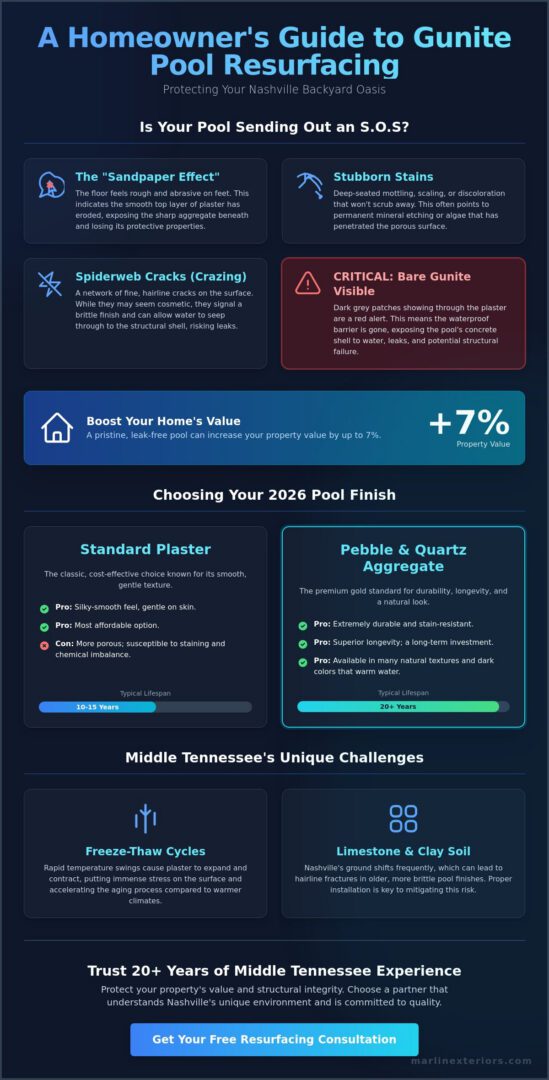
If your pool floor feels like 80-grit sandpaper against your feet, the clock is ticking on your finish. This “sandpaper effect” isn’t just a minor annoyance; it’s a clear signal that your plaster is eroding and losing its protective properties. When the smooth top layer wears away, it exposes the rough aggregate beneath, making every swim a literal scrape. Identifying these early warnings for gunite pool resurfacing nashville can save you from much more expensive structural failures down the road.
Stubborn stains are another red flag you shouldn’t ignore. While some discoloration comes from fallen leaves or metal objects, deep-seated mottling often points to mineral imbalances in your water that have permanently etched the surface. If you see “spiderweb” cracks, also known as crazing, the surface has become brittle. These small cracks might look cosmetic, but they often allow water to seep through to the structural shell. To understand the foundation of your pool, it helps to know what gunite is; it’s the high-strength concrete shell that depends on the plaster for waterproofing. When the plaster fails, the shell is at risk.
The Impact of Tennessee’s Freeze-Thaw Cycles
Nashville homeowners face a unique challenge compared to those in Florida or Arizona. Our Middle Tennessee winters are famous for rapid temperature swings. One day it’s 55 degrees; the next, it’s a hard freeze. This constant expansion and contraction puts immense stress on pool plaster. Because Nashville sits on limestone-heavy soil, the ground shifts frequently. This movement can lead to hairline fractures in older finishes that wouldn’t happen in more stable coastal climates. Our local environment essentially accelerates the aging process of your pool’s interior, making regular inspections vital for long-term protection.
Structural vs. Aesthetic Wear: Knowing the Difference
It’s vital to distinguish between a surface that looks old and one that is failing. If you begin to see dark grey patches through the white plaster, you are looking at the bare gunite. This is a critical warning sign. Once the waterproof barrier is gone, your pool can suffer from mystery leaks and water loss that can compromise the surrounding soil. In the Nashville area, standard pool plaster typically follows a “10-Year Rule.” Once you hit a decade of use, the chemical bonds in the plaster begin to break down regardless of how well you maintain the water. While a patch repair might fix a single chip, widespread erosion or deep cracking means gunite pool resurfacing nashville is the only way to safeguard your property’s value and structural integrity.
Choosing the Best Resurfacing Finish for Your Backyard
Selecting the right interior material is the most important decision you’ll make for your pool’s future. It defines the look, the feel under your feet, and the maintenance schedule you’ll follow for the next decade or more. For homeowners considering gunite pool resurfacing nashville, the options have expanded significantly in 2026. While traditional white remains a staple for its clean look, we’re seeing a major shift toward textures that mimic natural environments and offer superior durability.
We follow industry best practices to ensure every finish is applied with precision, protecting your pool against the chemical fluctuations common in Middle Tennessee. Your choice affects more than just looks. Darker finishes, like the charcoal grey and dark slate tones popular this year, can naturally raise water temperatures by several degrees by absorbing sunlight. Meanwhile, the physical texture of your finish determines how much effort you’ll spend scrubbing away algae or mineral deposits.
Standard Plaster: Pros, Cons, and Lifespan
Traditional white plaster, often called marcite, remains the most cost-effective choice for families in the Mt. Juliet and Franklin markets. Its primary advantage is a silky-smooth texture that’s gentle on swimmers’ skin. However, plaster is the most porous option available. This makes it more susceptible to staining and “pitting” if your water chemistry isn’t perfect. In our region, you can typically expect a lifespan of 10 to 15 years for standard plaster before the surface begins to thin and show signs of wear.
Pebble and Quartz: The Premium Investment
Pebble and quartz aggregates are the gold standard for longevity. Pebble finishes are particularly resilient, often lasting 20 years or more with proper care. These surfaces use tiny, polished river stones embedded in the cement to create a finish that is virtually stain-proof and highly resistant to chemical damage. 2026 design trends in Nashville favor these materials because they change your pool’s “ocean” hue to a deeper, more sophisticated blue. While quartz offers a subtle shimmer and increased strength over plain plaster, pebble finishes provide the best slip-resistance for high-traffic areas like steps and tanning ledges. If you want a surface that stands up to heavy use, our specialists at Marlin Exteriors, Inc. can help you compare these high-performance options side-by-side.
The Gunite Resurfacing Process: What to Expect
Resurfacing is a major undertaking that transforms your backyard into a construction zone for a few weeks. Understanding the timeline helps reduce the stress of the project. When we handle gunite pool resurfacing nashville, we treat your property with the same care we’d give our own. The process is systematic and designed to ensure the new finish lasts for decades, not just a few seasons.
The work begins with draining the water. This isn’t as simple as turning on a pump. We must carefully engage the hydrostatic relief valves at the bottom of the pool. This step prevents the pool shell from “popping” out of the ground due to groundwater pressure, which is a real risk in Middle Tennessee’s heavy, moisture-retaining soils. Once the pool is empty and safe, our crews move in for the “chip-out” phase. We use pneumatic tools to remove the old, failing plaster around the tile line and all floor fittings. This creates a clean, recessed edge so the new finish sits flush with your existing tile.
After the old material is cleared, we apply a specialized bond coat. This textured, professional-grade layer acts like industrial-strength Velcro. It ensures the new finish adheres perfectly to the original gunite shell. We follow industry best practices established by the Pool & Hot Tub Alliance to ensure this bond is permanent and leak-proof. Finally, our skilled artisans hand-trowel your chosen finish across the entire surface. As soon as the last section is smoothed, we start the water refill immediately to protect the material from the sun.
Preparation: Protecting Your Backyard and Plumbing
Construction is inherently messy, so we prioritize safeguarding your investment. We cover your pool deck and nearby landscaping with protective barriers to prevent damage from heavy equipment or debris. Before the new surface goes on, we inspect your tile and coping for any loose pieces that might fail later. We also perform pressure tests on your plumbing lines. It’s much better to find and fix a small leak now than after your beautiful new surface is finished and the pool is full of water.
The Critical 28-Day Curing Period
The job isn’t over when the water reaches the tile line. The first 28 days are the most important for the lifespan of your finish. You’ll need to brush the pool walls and floor twice daily. This prevents “plaster dust” from settling and hardening into a rough, permanent texture. During this phase, we closely monitor the water chemistry, specifically focusing on pH and calcium hardness. You must wait for the surface to fully cure before turning on heaters or salt-chlorine generators. Following these steps ensures your surface remains smooth and vibrant for years to come.
Maximizing Longevity: Local Care for Nashville Pools
Completing your pool restoration is a significant milestone, but the real work of structural guardianship begins the moment the pumps start. Think of your new surface as a living finish that reacts constantly to its environment. To protect your investment in gunite pool resurfacing nashville, you must move beyond simply keeping the water clear. You need to understand the science of water balance to prevent premature aging and surface pitting.
Nashville’s local water supply often contains high levels of calcium and minerals. While this might seem harmless, it directly impacts your pool’s Langelier Saturation Index (LSI). If your water becomes too “hard,” you’ll see white, crusty scale forming on your beautiful new finish. Conversely, if the water is too “soft” or aggressive, it will actually leach calcium directly out of your plaster to balance itself. This leads to permanent pitting and a rough texture that ruins the swimming experience. We recommend professional inspections every 2 to 3 years to catch these chemical imbalances before they cause irreversible damage.
Balancing Chemistry for Your New Surface
Maintaining a neutral LSI is the secret to a 20-year pool finish. Many homeowners assume that clear water is healthy water, but “hungry” water can be perfectly clear while it eats away at your pool walls. You should target an LSI between -0.3 and +0.3. Modern smart pool systems and high-quality digital testing kits are essential tools for monitoring these levels between our professional service visits. Remember that a slight investment in chemical precision today prevents a massive repair bill five years from now.
Winterizing Your Resurfaced Pool in Middle Tennessee
Our local climate requires specific winterization tactics to safeguard your new plaster. Never drain your pool completely during the off-season; the weight of the water is necessary to counteract the upward pressure of Nashville’s moisture-heavy clay soil. We suggest keeping the water level just below the tile line to prevent ice from expanding and cracking your coping. Using a high-quality safety cover is also vital. It keeps heavy debris and organic matter from decomposing against the surface, which can lead to deep, stubborn stains that are difficult to remove in the spring. For more detailed advice, seasonal pool opening and closing in Mt. Juliet provides a localized checklist for your backyard resort. If you’re ready to ensure your pool is protected for the long haul, our team at Marlin Exteriors, Inc. is here to help you develop a custom maintenance plan.
Why Marlin Exteriors, Inc. is Nashville’s Trusted Resurfacing Partner
Choosing a contractor for gunite pool resurfacing nashville shouldn’t feel like a gamble. We’ve spent over 20 years restoring properties across Middle Tennessee, building a reputation on the pillars of honesty and high-level skill. We don’t just see ourselves as builders; we act as guardians for your most valuable personal priorities. Our commitment to “Structural Guardianship” means we look past the surface to ensure the core of your pool is protected against the unique environmental pressures of our region.
From the first time we walk your pool deck to the final splash, our process is designed for clarity. We provide transparent communication and a logical, efficient workflow that removes the anxiety typically associated with major home improvements. You’ll know exactly what to expect at every stage of the project. We handle the technical complexities of physical remodeling so you can focus on enjoying your home, knowing your investment is in safe, capable hands.
The Local Advantage: Neighborly Service and Expertise
Being based in Mt. Juliet gives Marlin Exteriors, Inc. a distinct edge. We understand the specific behaviors of the clay soil in Davidson, Williamson, and Sumner counties. We know how our local weather patterns can impact the curing process of a new finish. When you work with us, you aren’t dealing with a faceless national corporation. You have direct access to a local team that is personally invested in every project we undertake. This neighborly approach ensures that your home is treated with the respect it deserves.
Beyond Resurfacing: Complete Backyard Modernization
Often, a failing pool surface is just one part of a larger need. If you’re planning a full pool renovation in Nashville, we can integrate your resurfacing with significant upgrades. This might include replacing outdated waterline tile, installing modern coping, or adding energy-efficient pumps and smart automation systems. We can even add highly requested 2026 features like tanning ledges during the remodeling phase.
If you are starting from scratch or considering a complete overhaul, our gunite pool installation guide outlines the high standards Marlin Exteriors, Inc. brings to every build. We specialize in creating a cohesive backyard space where every technical detail serves the practical benefits of safety, aesthetic appeal, and long-term investment value. Your pool is a major asset; we have the seasoned experience to keep it in safe, capable hands.
Secure Your Backyard Investment for the Next Decade
Restoring your pool is about more than just a fresh look. It’s an essential step in protecting your home’s value and structural integrity. By recognizing the early signs of plaster erosion and choosing a durable finish that stands up to Middle Tennessee’s unique environment, you ensure your oasis remains a source of joy rather than stress. Consistent care and professional oversight are the best ways to maximize the lifespan of your new surface and prevent future leaks.
At Marlin Exteriors, we bring over 20 years of local experience to every project. As a family-owned and operated business based in Mt. Juliet, we take pride in our specialized expertise in gunite restoration. We’re here to guide you through every phase of gunite pool resurfacing nashville, from the initial inspection to the first swim of the season. Our team treats your property with the honesty and high standards you deserve from a neighbor.
Schedule your free Nashville pool resurfacing consultation with Marlin Exteriors today! We look forward to helping you transform your pool into a beautiful, lasting retreat for your family.
Frequently Asked Questions
How much does gunite pool resurfacing cost in Nashville?
The total investment for your project depends on the pool’s square footage, the current condition of the shell, and the specific finish you choose. Premium materials like pebble or quartz aggregates generally require a higher initial investment than standard white plaster but offer significantly longer lifespans. We recommend a professional on-site inspection to provide an accurate estimate tailored to your backyard’s unique requirements.
How long does the resurfacing process take from start to finish?
The physical construction phase typically takes 7 to 14 days, assuming the weather remains favorable. This timeline includes draining the pool, chipping out the old material, applying the new finish, and refilling the water. Once full, you’ll need to follow a strict 28-day curing protocol involving daily brushing and chemistry monitoring to ensure the surface sets correctly.
Can I change the color of my pool during the resurfacing process?
Yes, this is the perfect opportunity to modernize your pool’s aesthetic. In 2026, many Nashville homeowners are choosing darker tones like charcoal grey or dark slate to create a natural, lagoon-like appearance. Changing your finish color can completely transform the look of your water and your entire backyard landscape without requiring structural changes.
Is it better to resurface with plaster or pebble in Tennessee?
Pebble finishes are generally considered the superior choice for gunite pool resurfacing nashville due to our volatile climate. While traditional plaster is smooth and cost-effective, pebble surfaces are much more resilient against the freeze-thaw cycles we experience in Middle Tennessee. Pebble finishes also resist staining and chemical damage better than porous plaster, often lasting twice as long.
Do I need to replace my pool tile when I resurface?
You aren’t required to replace your tile, but it’s highly recommended for both functional and aesthetic reasons. During the resurfacing process, we must chip away the old finish right at the tile line. Replacing the tile at this stage ensures a more reliable, watertight bond between the new surface and the tile, preventing future leaks or pieces popping off.
What is the best time of year to resurface a pool in Nashville?
Spring and early fall are the ideal seasons for pool restoration in our region. These months provide the moderate temperatures necessary for the materials to bond and cure properly. Avoiding the extreme humidity of mid-summer and the hard freezes of winter helps ensure the finish dries evenly and maintains its structural integrity for years to come.
How often should a gunite pool be resurfaced in Middle Tennessee?
Most pools with a standard plaster finish require resurfacing every 10 to 15 years. If you choose a high-performance aggregate like pebble or quartz, that lifespan can extend to 20 years or more. Factors like how well you maintain your water chemistry and the stability of the soil around your property will also influence how often you need to update the surface.
Will resurfacing fix a leaking gunite pool?
Resurfacing effectively repairs leaks caused by surface-level issues, such as porous plaster or minor hairline cracks in the interior finish. However, if your water loss is caused by a structural crack in the concrete shell or a break in the underground plumbing lines, those must be repaired separately. We conduct thorough inspections to identify the root cause of any leaks before applying a new surface.