A rough pool surface is much more than a minor discomfort for your feet; it’s a warning sign that your home’s most expensive outdoor asset is losing its structural integrity. If you’ve noticed “pool toe” or stubborn stains that chemicals won’t touch, you’re likely starting to research the pool plastering cost nashville contractors are quoting this season. Your pool’s finish serves as the essential guardian for its gunite shell, and waiting too long to resurface can turn a routine upgrade into a major structural repair.
We know that local homeowners want to feel confident that their investment is in safe, capable hands. It’s stressful to face a renovation when you aren’t sure which materials offer the best value or what hidden factors might drive up the final bill. This 2026 guide provides the clarity you need to move forward. We’ll explore the durability of different finishes, explain how Middle Tennessee’s climate impacts your pool’s lifespan, and show you how to maximize the ROI of your renovation. You’ll gain a complete understanding of the resurfacing process so you can restore your backyard to its original beauty without any unwanted surprises.
Key Takeaways
- Understand why a waterproof plaster seal is essential for protecting your pool’s structural gunite shell for the next 10 to 15 years.
- Learn how to accurately budget for your pool plastering cost nashville by accounting for surface area and the current state of your pool’s finish.
- Evaluate the durability and aesthetic benefits of different finish types, from budget-friendly plaster to high-performance quartz aggregates.
- Identify the ideal seasonal windows in Middle Tennessee to schedule your resurfacing project for the best curing results.
- Recognize the specific qualifications to look for in a local renovation partner to ensure your backyard investment is in safe hands.
Understanding Pool Plastering Costs in Nashville for 2026
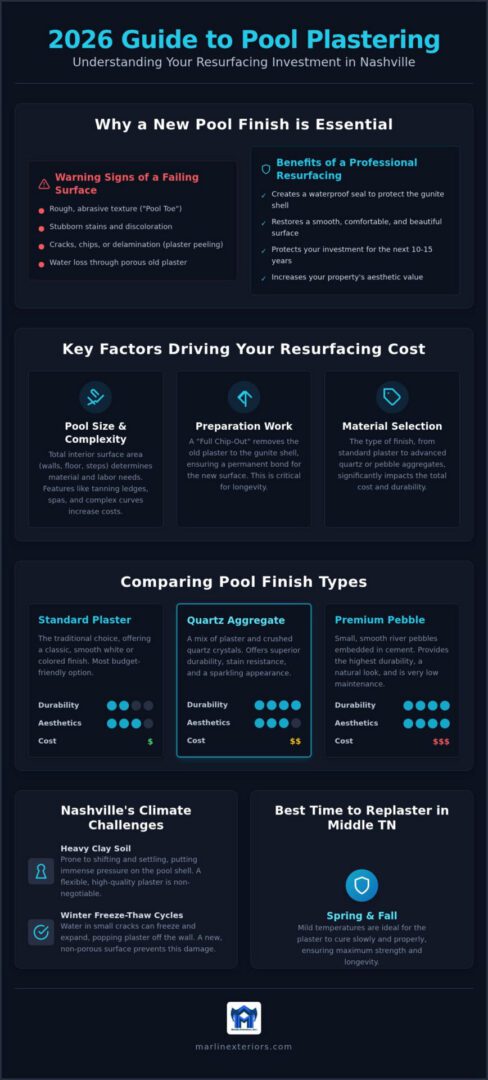
Think of pool plastering as more than just a cosmetic finish. It’s the final, waterproof seal that keeps your pool’s water inside the vessel and away from the structural gunite shell. Understanding Pool Plaster as a foundational building material helps you see why it’s so vital; it creates a non-porous surface that protects the underlying concrete from the elements. In Middle Tennessee, we typically see homeowners needing a resurfacing every 10 to 15 years. This timeframe is dictated by chemical wear, local water chemistry, and the physical stress of our environment. When you begin to calculate the pool plastering cost nashville contractors provide, you’re really budgeting for the long-term guardianship of your property.
Cutting corners with “cheap” plaster is a common mistake that often leads to expensive repairs down the road. Nashville’s heavy clay soil is notorious for shifting and settling, which puts immense pressure on your pool’s structure. If the plaster is thin or poorly applied, it won’t have the flexibility to handle these subtle movements. A low-quality finish might save money today, but it often results in delamination or cracks that allow water to migrate into the gunite, leading to structural failure that costs far more than a professional resurfacing job.
Why Plastering is Essential for Nashville Pools
Nashville’s weather presents specific challenges for pool owners. Our winter “freeze-thaw” cycles are particularly aggressive. When water seeps through tiny cracks in old, porous plaster, it expands as it freezes. This expansion can pop the plaster right off the wall or damage the gunite beneath it. Beyond structural protection, a fresh finish solves the “pool toe” issue caused by rough, aged surfaces that have lost their smooth cream coat. It also restores the aesthetic value of your home, ensuring your backyard remains a sanctuary rather than a source of maintenance stress. A high-quality finish acts as a shield, protecting your investment from Tennessee’s unpredictable climate.
The 2026 Price Range: What to Expect
Several factors influence the pool plastering cost nashville residents will see in their estimates this year. For a standard 15×30 pool, your total investment depends heavily on the condition of the existing substrate. Local labor demand in growing areas like Franklin and Brentwood remains high, which can impact scheduling and pricing. You’ll also need to decide between a simple “skim coat” and a full chip-out. While a skim coat might seem like a budget-friendly shortcut, applying new material over a failing surface is a temporary fix. A professional full chip-out involves removing the old material completely to ensure a permanent bond. This method is the only way to provide true peace of mind and a surface that lasts another decade.
Key Factors That Drive Your Nashville Resurfacing Estimate
Calculating your pool plastering cost nashville involves looking at more than just the dimensions of your pool. While many homeowners start with a simple length-by-width measurement, professionals calculate the total interior surface area. This includes the walls, floor, and any steps. A deep end that drops to eight feet requires significantly more material and labor than a shallow play pool. If your backyard features custom gunite pools with intricate curves, tanning ledges, or attached spas, the complexity of the hand-troweling process increases, which naturally reflects in the estimate.
Pool Size and Complexity
Complexity is a major driver of labor time. Standard rectangular pools are straightforward, but Nashville’s custom builds often include features that require specialized detail work. Tanning ledges, for example, have multiple edges and corners that must be finished perfectly to ensure swimmer comfort. Spas are even more labor-intensive due to their tight radius and the need to integrate tile work flawlessly. We look at the total volume of material needed to provide a thick, protective seal that stands up to Tennessee’s shifting clay soils and heavy rainfall.
Labor and Prep Work in Middle Tennessee
The most critical part of a renovation happens before the new finish is even mixed. Proper preparation ensures your new surface actually sticks. A full “chip-out” is often necessary, especially if the old plaster is delaminating or peeling away from the shell. This process involves removing the old layer down to the bare gunite to create a mechanical bond. While some might suggest a simple bond coat, a full chip-out provides the longest-lasting results for local homeowners. This phase also includes the removal and disposal of old materials, which is subject to local waste regulations in the Nashville metro area.
Navigating local requirements is a key part of choosing a trusted Nashville pool renovation partner who understands the specific standards for our region. In Davidson and Williamson counties, renovation permits may be required depending on the scope of work. Additionally, suburban backyard accessibility plays a role. If our team has to move equipment through narrow side gates or over steep slopes in Brentwood hills, it requires more time and specialized handling. If you’re ready to see how these factors apply to your specific backyard, we can help you plan a professional pool renovation that fits your needs.
Finally, consider the “While You Are At It” factor. It’s often most cost-effective to replace waterline tile and coping at the same time as the plaster. Since the pool is already drained and the crew is on-site, you save on mobilization fees. Updating these elements not only prevents future leaks but also ensures your pool looks brand new from the water to the deck. This comprehensive approach protects your investment and provides the peace of mind that your pool is structurally sound for years to come.
Comparing Finish Types: From Traditional Plaster to Premium Pebble
The material you select for your resurfacing project is the single most influential variable in your pool plastering cost nashville estimate. It’s a decision that balances your immediate budget with the long-term durability of your investment. While every finish we apply provides a waterproof seal, the lifespan and texture vary significantly between traditional mixes and modern aggregates. Choosing the right one ensures your backyard remains a sanctuary for years without the stress of premature staining or surface failure.
To help you weigh your options, consider this quick comparison of the most popular finishes in Middle Tennessee:
- Standard White Plaster: Lifespan of 7 to 12 years; lowest initial investment; smooth but porous.
- Quartz Aggregates: Lifespan of 10 to 15 years; moderate investment; excellent stain resistance.
- Pebble Finishes: Lifespan of 20+ years; higher investment; natural look and maximum durability.
- Polished Marble: Lifespan of 15 to 20 years; premium investment; ultra-smooth resort feel.
Standard Plaster vs. Quartz
Traditional white plaster, a blend of white cement and crushed marble, has been the industry standard for decades. It’s valued for its classic look and smooth feel, but it’s the most susceptible to Nashville’s specific water chemistry challenges. If your pH levels fluctuate, standard plaster can etch or develop unsightly mineral scales quickly. For most Nashville families, we find that quartz aggregates like Diamond Brite offer a much better value. By mixing hard quartz crystals into the plaster, the surface becomes less porous and much harder. This finish also allows for a wider range of colors. Choosing a medium-blue quartz can actually help maintain a comfortable water temperature during our humid July heat by absorbing just enough sunlight without making the water too warm.
Pebble and High-End Aggregates
Pebble finishes represent the gold standard for luxury gunite pools in Brentwood and Franklin. These finishes use small, smooth river stones embedded in the cement to create a surface that is virtually indestructible. While some homeowners worry the texture might be too rough for children’s feet, modern “mini-pebble” options provide a much smoother experience while retaining the strength of the stone. A premium pebble finish serves as a permanent upgrade that significantly boosts a Nashville home’s resale value by signaling a low-maintenance, high-quality outdoor living space. Because these surfaces can last two decades or more, they often end up being the most cost-effective choice when you calculate the cost per year of service.
If you prefer the look of a high-end resort, polished marble finishes provide an alternative to pebble. These are sanded down after application to create a surface that feels like smooth stone underfoot. Regardless of which premium finish you choose, you’re investing in a surface that protects your pool’s structure while providing the peace of mind that comes with a long-lasting, beautiful result.
The Best Time of Year to Replaster Your Nashville Pool
Timing your renovation is just as critical as selecting your finish materials. While you might be tempted to wait until the first warm day in May to call a contractor, understanding the seasonal factors that influence pool plastering cost nashville estimates will help you achieve a better result. Plaster is a cementitious product that requires a controlled environment to cure properly. If the weather is too hot, too cold, or too humid, the finish can suffer from “crazing” or map cracking, which compromises both the look and the waterproof seal of your pool.
Spring and Fall: The Peak Renovation Seasons
In Middle Tennessee, we recommend the “Goldilocks” windows of Spring (late March to early May) and Fall (September to October). During these months, temperatures typically stay between 50 and 80 degrees, which is the ideal range for plaster to hydrate and harden slowly. Slow curing creates a denser, stronger surface that stands up better to the elements. Scheduling during these times also helps you avoid the frantic “Spring Rush” that often hits Mt. Juliet and Hendersonville as Memorial Day approaches. By planning ahead, you ensure your pool is ready for the first swim of the season without the stress of last-minute delays.
Managing the Curing Process in TN Humidity
Nashville’s high humidity during July and August presents a significant challenge for new plaster. When it’s 95 degrees with 90% humidity, the surface can dry out before the hydration process is complete. This leads to a weak, dusty finish that won’t last its full expected lifespan. Once the plaster is applied, the most critical step is the immediate “water start-up.” The pool must be filled without stopping to prevent a “bathtub ring” and to keep the curing environment stable.
For the first 28 days, your new finish requires dedicated daily care to ensure it sets correctly. This process includes:
- Brushing the surface twice daily to remove plaster dust and prevent scaling.
- Careful monitoring of water chemistry to prevent aggressive water from etching the surface.
- Avoiding the use of automatic pool cleaners which can mar the still-soft finish.
Our local water hardness also plays a role in how your finish matures. Nashville water can be aggressive toward new plaster if not balanced correctly from day one. Because we understand these local environmental factors, we guide you through every step of the initial start-up to protect your investment. To ensure your project is scheduled during the ideal weather window, we recommend you contact us for a professional pool renovation consultation today. Booking during the winter months is often the smartest move; it secures your spot on the calendar and allows us to begin work as soon as the weather is perfect for a lasting finish.
Choosing a Trusted Nashville Pool Renovation Partner
Choosing the right contractor for your resurfacing project is about more than just finding the lowest pool plastering cost nashville estimate. It’s about ensuring that the person handling your property understands the unique environmental factors of Middle Tennessee. A contractor without a deep local history might miss the signs of structural stress in our clay soil or fail to account for the specific curing needs during a humid Nashville summer. With over 20 years of local experience, Marlin Exteriors, Inc. prioritizes reliability and long-term protection over quick, surface-level fixes.
Verifying a contractor’s standing is a non-negotiable step for any homeowner in Davidson or Williamson County. Always confirm that your partner carries comprehensive liability and workers’ compensation insurance specific to Tennessee regulations. This protects you from being held liable for accidents on your property. A trusted specialist will be open about these credentials and will provide a clear, written agreement that outlines every phase of the project, including how they handle potential structural issues found during the prep phase.
What to Look for in a Pool Contractor
A reputable partner should be able to provide recent references from completed projects in neighborhoods like Franklin, Brentwood, and Hendersonville. Seeing their work firsthand or speaking with a neighbor gives you peace of mind that the crew respects the property and maintains a clean job site. Additionally, look for a contractor who communicates openly about potential “hidden” costs. For example, if a full chip-out reveals aging plumbing lines or light niches that need repair, you deserve to know immediately rather than seeing a surprise on the final invoice. This neighborly approach to honesty is what separates a true professional from a faceless corporation.
The Marlin Exteriors, Inc. Difference
We believe that your pool is an integral part of your home’s overall value. Our specialized expertise in pool renovation nashville allows us to offer solutions that national competitors simply can’t match. We don’t just look at the plaster; we look at the health of your entire outdoor space. Many of our clients find value in working with a partner who can provide comprehensive care for their property. Whether you are updating your backyard oasis or need guidance on roofing nashville tn, Marlin Exteriors, Inc. brings the same commitment to craftsmanship and ethical standards to every project.
Our team acts as a guardian for your most valuable personal priorities. By choosing a combined pool and exterior specialist, you ensure that every renovation works in harmony to protect your home’s structural integrity and aesthetic appeal. We treat every pool as if it were in our own backyard, providing the accuracy and high-level skill your investment deserves. Contact Marlin Exteriors, Inc. for a custom pool plastering quote today.
Ready to Restore Your Nashville Oasis?
Resurfacing your pool is a significant step in protecting your home’s value and ensuring your family’s comfort. By understanding the pool plastering cost nashville homeowners face in 2026, you can make an informed decision between classic plaster and premium pebble finishes. Timing your renovation for the mild Spring or Fall months ensures a durable cure that stands up to Middle Tennessee’s climate. Choosing a partner who understands our local soil and weather patterns is the best way to gain peace of mind throughout the process.
Marlin Exteriors, Inc. brings over 20 years of Middle Tennessee experience to every project. As an A+ rated local specialist in custom gunite and fiberglass solutions, we pride ourselves on high standards and honest service. We treat your property with the care it deserves, acting as guardians for your most important outdoor asset. You aren’t just buying a new surface; you’re investing in long-term protection for your backyard. Get Your Free Nashville Pool Renovation Estimate today. We look forward to helping you create a smooth, beautiful sanctuary that lasts for years to come.
Frequently Asked Questions
How much does it cost to replaster a 20,000-gallon pool in Nashville?
The total investment for a 20,000-gallon pool depends primarily on the interior surface area and your choice of finish. While gallonage gives us an idea of size, we calculate the pool plastering cost nashville homeowners pay based on the square footage of the floor and walls. A standard pool of this volume typically requires a full week of labor for prep work and application. Choosing premium aggregates will increase the initial quote but provides better long-term durability.
Is it better to replaster or just paint my gunite pool?
Replastering is the only professional solution that provides a true waterproof seal for your gunite shell. While pool paint is a tempting budget option, it’s a temporary cosmetic fix that often peels within two to three years. Plaster creates a thick, protective layer that lasts over a decade. Investing in a proper resurfacing protects the underlying structure from water migration and prevents expensive structural damage that paint simply cannot stop.
How long does the pool plastering process take from start to finish?
A typical resurfacing project takes about seven to ten days of active on-site work, assuming the weather remains clear. The process begins with draining the pool and performing a thorough chip-out of the old material. Once the shell is prepped and any repairs are made, we apply the new finish in a single day. The final phase involves refilling the pool immediately and beginning a 28-day water chemistry start-up period.
Can I change my pool color when I replaster?
Yes, replastering is the ideal time to completely transform your pool’s aesthetic with a new color. Modern quartz and pebble finishes offer a wide spectrum of shades, from classic white to deep Caribbean blues and modern greys. Keep in mind that darker colors absorb more sunlight, which can naturally raise your water temperature by several degrees during the peak of a Middle Tennessee summer. We’ll help you pick a shade that fits your style.
Does pool resurfacing include fixing cracks in the gunite?
Structural repairs are a standard part of our professional preparation process. After we remove the old plaster, we carefully inspect the gunite shell for any signs of stress or “spider” cracks. We use specialized torque staples or high-strength epoxy injections to stabilize these areas before applying the new finish. This ensures your new plaster has a solid, stable foundation and prevents old cracks from telegraphing through to the new surface.
Will a new pool finish increase my home value in Middle Tennessee?
A professionally resurfaced pool significantly boosts the resale value and marketability of your home in areas like Franklin and Brentwood. Real estate experts agree that a well-maintained pool is a major selling point for local families. A fresh finish signals to buyers that the pool is structurally sound and move-in ready. It eliminates the “maintenance fear” that often comes with older pools, making your property stand out in the competitive Nashville market.
What is the most durable pool finish for Nashville weather?
Pebble finishes are the most durable option for our local climate and its aggressive freeze-thaw cycles. These surfaces use small, naturally tumbled stones that are virtually unaffected by chemical imbalances or UV exposure. While standard plaster is a reliable choice, a pebble finish can last 20 years or more with proper care. It provides the best protection for your gunite shell and offers the highest return on investment for long-term homeowners.
Do I need to be home while the pool is being replastered?
You don’t need to be present for the chip-out or application phases, but we need you there for the refilling process. Once the new plaster is troweled, we start the water immediately. It’s vital that the water isn’t stopped until it reaches the middle of the waterline tile. You’ll need to monitor the hose and turn it off at the perfect moment to prevent a permanent “level ring” from forming on your beautiful new finish.