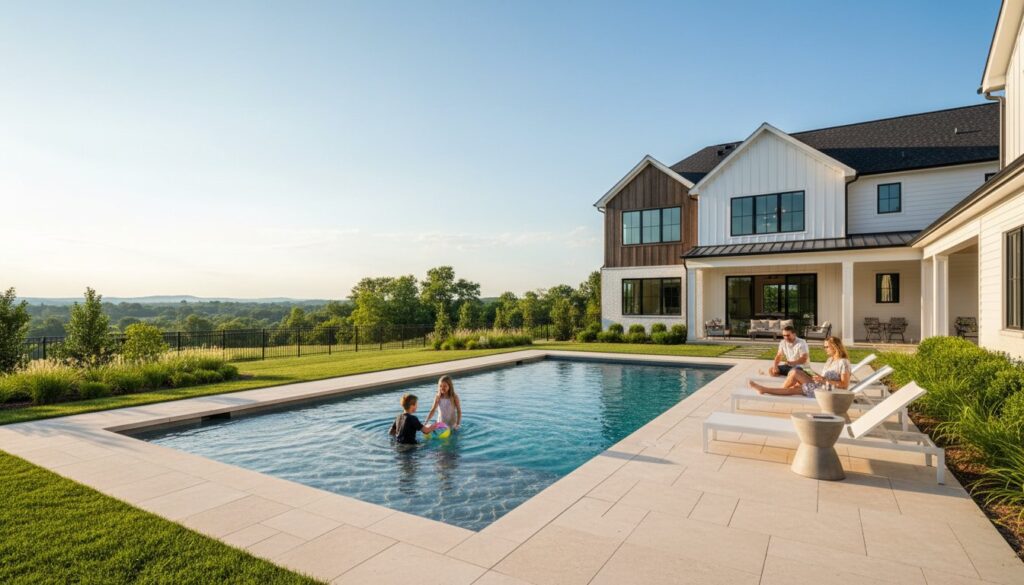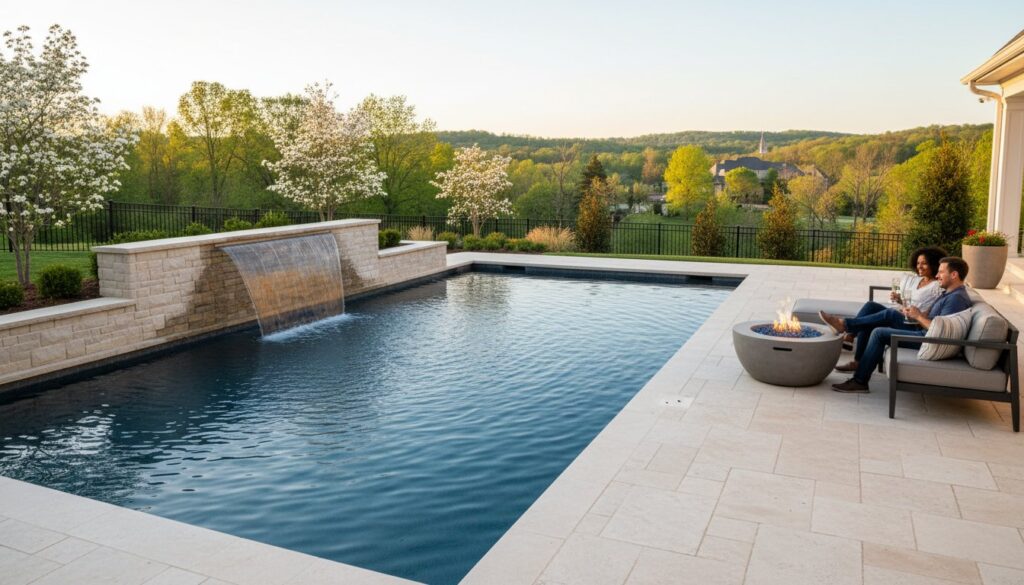
Have you ever stepped onto your deck on a humid Nashville morning only to find your beautiful backyard oasis beginning to show signs of a looming algae outbreak? It’s a frustrating moment that many Middle Tennessee homeowners face, especially when you’ve invested significantly in a custom outdoor space. This gunite pool maintenance guide is here to ensure your investment remains a source of joy rather than a list of chores. We know that the transition from a sparkling pool to a stained surface can happen fast in our climate, but with the right guardianship, your pool will stay swim-ready all season long.
We’ll help you master the essential routines that protect both your pool’s plaster and its structural integrity. You’ll gain a clear, manageable weekly schedule and learn the professional secrets to balancing chemicals without the confusion. We’ll also cover vital local updates, such as the 2024 International Swimming Pool and Spa Code standards recently adopted in Franklin and the 48 inch fencing requirements mandated by Tennessee law. From identifying minor plaster issues before they become cracks to knowing exactly when a DIY fix is enough, this guide provides the peace of mind you deserve.
Key Takeaways
- Learn why the unique porous texture of your pool requires a specialized approach and why consistent brushing is your best defense against deep-rooted algae.
- Use our gunite pool maintenance guide to establish a “Saturday Morning” routine that keeps your water crystal clear and ready for weekend guests.
- Understand the “Turnover Rate” and how modern Variable Speed Pumps can lower your energy bills while keeping your filtration system running at peak efficiency.
- Identify the early warning signs of delamination and hollow spots to protect the long-term integrity of your pool’s plaster or pebble finish.
- Discover the ideal timing for opening your pool in Middle Tennessee to beat the spring algae bloom and master the local hybrid winterization process.
The Fundamentals of Gunite Pool Maintenance in Middle Tennessee
Owning a swimming pool in Middle Tennessee is a significant commitment to your property’s value and your family’s lifestyle. To protect that asset, you need a reliable gunite pool maintenance guide that addresses the specific challenges of our region. Gunite itself is a high-pressure mixture of sand and cement sprayed over a steel rebar cage. This construction method creates a rock-solid foundation, but it’s fundamentally different from vinyl or fiberglass. Because gunite is naturally porous, it acts like a giant sponge for chemicals and minerals. If you don’t maintain a proactive stance, algae can root itself deep within those pores, making it much harder to clear than a surface-level bloom.
We view pool care as a form of guardianship over the pool shell. When you follow the professional standards we’ve established at Marlin Exteriors, Inc., you aren’t just cleaning water; you’re preventing structural degradation. Proper maintenance ensures a high long-term ROI, allowing your custom pool to last for decades. Without this attention, the very strength of the gunite can become a liability as water seeps into the structure and compromises the rebar over time. We’ve seen how a well-maintained shell remains stable and beautiful for generations, while neglect can lead to costly structural repairs within just a few years.
Understanding the Gunite Shell and Interior Finish
It’s helpful to distinguish between the structural shell and the interior finish. The gunite provides the strength, while the plaster or pebble finish provides the aesthetic beauty and the primary water-tight seal. Your water chemistry directly impacts the lifespan of this interior finish. If the pH levels drop too low, the water becomes acidic and begins to leach minerals directly out of the plaster, leading to “pitting” or a rough texture. This durability and versatility is exactly why gunite is the premier choice for custom pools in Nashville, as it allows for unmatched design flexibility while maintaining incredible structural integrity.
Why Tennessee’s Climate Impacts Your Pool Care
Our local weather patterns demand a specific approach to pool health. In Mt. Juliet, heavy spring pollen can quickly overwhelm filtration systems, requiring more frequent backwashing than you might expect. When the Nashville summer hits with humid 90-degree days, chlorine consumption skyrockets. Algae thrives in this heat, so your chemical balancing must be precise to stay ahead of the bloom. Additionally, we often experience late-summer droughts. During these dry spells, you must monitor water levels closely. If the water drops below the skimmer, your pump can run dry and suffer expensive mechanical failure. This gunite pool maintenance guide helps you navigate these local shifts with confidence, ensuring your backyard resort stays pristine through every season.
Weekly Maintenance Checklist: Keeping Your Water Crystal Clear
Establishing a “Saturday Morning” routine ensures your pool is always ready for weekend guests and family gatherings. We recommend starting with a thorough debris sweep. Empty your skimmer baskets and check the pool floor for leaves or organic matter. Leaving debris to sit doesn’t just look untidy; it allows organic material to break down and consume your chlorine. A vital part of any effective gunite pool maintenance guide is the commitment to weekly brushing. While we’ve discussed why the porous nature of gunite is a challenge, the solution is simple: you must scrub the walls, steps, and corners every week to knock loose any spores before they can take root and create a stubborn bloom.
When your water needs an extra boost, timing is everything. If you need to “shock” the pool to kill bacteria or clear cloudy water, always do it at night. The intense Middle Tennessee sun is a natural enemy to unstabilized chlorine. UV rays can destroy the majority of your shock treatment in just a few hours. By adding chemicals after sunset, you give the treatment an entire night to work at full strength without being neutralized by the sun. This proactive approach saves you money on chemicals and ensures your water stays safe and inviting.
Mastering Water Chemistry and pH Balance
Maintaining the right chemical balance is about more than just clarity; it’s about protecting your pool’s physical structure. You should aim for a pH level between 7.4 and 7.6 and total alkalinity between 80 and 120 ppm. For gunite owners, calcium hardness is uniquely critical. Keep your calcium levels between 200 and 400 ppm. If the water becomes too “soft,” it will actually leach calcium directly out of your pool’s finish to balance itself, leading to permanent pitting. While at-home test strips are great for quick daily checks, we suggest a professional water test once a month to ensure your levels align with the safety protocols in CDC’s Model Aquatic Health Code.
Adhering to these strict hygiene standards is essential for any facility; similarly, in the commercial sector, professional medical facility cleaning Alberta provides the specialized care needed to maintain sanitary environments according to rigorous health regulations.
Surface Cleaning and Algae Prevention
The tools you use can make a big difference in the longevity of your finish. For traditional plaster, a stainless steel brush is excellent for dislodging tough algae. However, if you have a pebble or quartz finish, use a nylon brush to prevent scratching the surface. Remember that automatic pool cleaners are a helpful supplement, but they aren’t a replacement for manual brushing. They often miss the tight corners and steps where algae starts. Keep a close watch for “Mustard Algae,” which looks like fine yellow dust on the floor. This variety is common in humid Nashville summers and requires a specific treatment plan to eradicate. If you find yourself struggling with persistent water issues, our team at Marlin Exteriors, Inc. can help you get your chemistry back on track.
Optimizing Pool Equipment and Filtration Systems
Your pool’s equipment acts as the heart of the entire system. To keep your water healthy and inviting, you must understand the concept of the “Turnover Rate.” This is the goal of moving every gallon of water in your pool through the filtration system at least once every 24 hours. For a typical 20,000-gallon pool, your pump needs to process that full volume daily to remove the debris and contaminants that naturally accumulate. This gunite pool maintenance guide emphasizes that without proper turnover, even the most expensive chemicals won’t keep your water clear. We highly recommend Variable Speed Pumps (VSPs) for our Middle Tennessee neighbors. These modern pumps allow you to run the system at lower speeds for longer periods, which drastically reduces energy bills compared to traditional single-speed models.
Routine inspections are the best way to prevent small issues from becoming major repairs. Check your pump basket every week to ensure it’s clear of leaves and twigs. While you’re there, inspect the O-ring under the pump lid. A dry or cracked O-ring is the most common cause of suction leaks, which introduce air into the system and reduce filtration efficiency. We also suggest keeping the area around your equipment pad clear of overgrown landscaping. Proper airflow prevents the motor from overheating during our sweltering July afternoons, while clean surrounding decking prevents dirt from washing directly into the skimmers and straining the pump.
Maintaining organized and clearly defined zones is a safety best practice that applies to industrial environments as well; for those looking to optimize commercial spaces, you can discover StripeGuys Warhouse Line Striping for expert guidance on floor safety and efficiency.
Filter Maintenance: Sand, DE, and Cartridge Care
The type of filter you have dictates your specific cleaning schedule. Sand and Diatomaceous Earth (DE) filters require a process called “backwashing” to flush out trapped dirt and contaminants. You’ll know it’s time to backwash when the pressure gauge reads 8 to 10 PSI higher than its “clean” starting pressure. Cartridge filters operate differently and don’t require backwashing. Instead, they need a deep clean at least once a year using a specialized filter cleaner to strip away body oils and mineral deposits. If your pressure remains high even after a thorough cleaning, it’s a clear sign that the filter element has reached the end of its life and needs a complete replacement.
Pump Efficiency and Circulation Strategies
Nashville summers demand longer run times to combat the heat and high bather loads. We suggest running your pump for 8 to 12 hours daily during the peak of the season. In the winter, you can scale this back significantly as long as the water stays moving to prevent freezing. To maximize efficiency, position your return jets to create a circular flow that eliminates “dead spots” in corners or behind steps where algae loves to hide. Proper circulation ensures your chemicals are distributed evenly throughout the entire shell. Investing in high-quality components from the start is vital, which is why we focus on durable, professional-grade gear during every gunite pool installation in Tennessee. Reliable equipment makes your weekly routine much simpler and protects your property investment for the long haul.

Protecting Your Investment: Long-Term Surface Care and Repairs
Your pool’s interior finish is the first line of defense for the structural gunite shell. In our Middle Tennessee environment, these surfaces endure significant stress from fluctuating temperatures and chemical exposure. While a standard plaster finish typically serves a family for 10 to 15 years, premium pebble or quartz options can last two decades. We emphasize that a gunite pool maintenance guide isn’t just about water clarity; it’s about surface preservation. When chemistry is neglected, as we discussed regarding calcium levels, the water becomes “hungry” for minerals and begins to leach calcium from the walls. This process, known as pitting, creates a sandpaper-like texture that is uncomfortable for swimmers and provides a perfect breeding ground for stubborn algae.
You should understand the difference between surface crazing and structural failure to avoid unnecessary anxiety. Crazing refers to very fine, spiderweb-like hairline cracks that appear on the plaster surface over time. These are generally aesthetic and don’t threaten the pool’s integrity. However, if you notice delamination, where the finish actually lifts or sounds hollow when tapped, it’s a sign that the bond between the plaster and gunite has failed. Addressing these issues early prevents water from reaching the rebar. If water penetrates the shell, it can lead to rust stains and eventual structural degradation that requires much more intensive repairs.
Recognizing Signs Your Pool Needs Resurfacing
- Persistent Staining: Mineral or organic stains that won’t lift with standard chemical treatments.
- Surface Etching: Rough, white patches that feel abrasive to the touch and trap dirt.
- Visible Gunite: Thinning areas where the dark gray structural shell begins to show through the finish.
If you’re seeing these symptoms, a modern pool renovation in Nashville can transform your backyard. Upgrading to a pebble finish provides superior durability against the Tennessee climate. We typically recommend scheduling this major work in the fall or spring. Moderate temperatures ensure the new finish cures perfectly without the stress of extreme summer heat or winter freezes.
Detecting and Preventing Structural Leaks
Distinguishing between normal evaporation and a structural leak is simple with the “Bucket Test.” Place a 5-gallon bucket on a pool step and fill it so the water level inside matches the pool level outside. After 24 hours, if the pool level has dropped significantly more than the bucket, you likely have a leak. Common culprits include the skimmer throat, the tile line, or the light niches. Ignoring even a small leak is risky; escaping water can erode the supporting soil and lead to a compromised shell. If you suspect your pool is losing water, reach out to the specialists at Marlin Exteriors, Inc. to safeguard your property’s foundation and structural integrity.
Seasonal Transitions: Opening and Closing Your TN Pool
Middle Tennessee homeowners occupy a unique climate zone that requires a “hybrid” approach to seasonal care. Unlike the deep North, where pools are frozen solid for months, or the far South, where they stay open year-round, our region experiences wild temperature swings. This gunite pool maintenance guide focuses on navigating these shifts to ensure your investment remains protected. We’ve seen local winters range from mild and rainy to sudden, record-breaking deep freezes. Because of this unpredictability, a proactive strategy is your best defense against cracked pipes or a green, swampy opening in the spring. Establishing a reliable routine for these transitions provides the peace of mind that your backyard resort is always in safe, capable hands.
Timing is everything when it comes to the spring. We recommend opening your pool in late March or early April. While it might still be too chilly for a swim, this early start allows you to balance the water before the first major algae bloom. Once the Tennessee sun warms the water consistently above 60 degrees, dormant algae spores begin to multiply rapidly. By opening early, you get ahead of the biological curve and ensure a “no-surprises” start to the season. Professional services play a vital role here, as a seasoned expert can spot small equipment issues during the opening process that might otherwise lead to a mid-summer breakdown.
The Spring Opening Process for Nashville Homeowners
Opening your pool is a systematic process that begins with a careful cover removal. Clean the cover thoroughly before storing it to prevent mold growth. Once the pool is uncovered, we inspect the filtration system and pump for any signs of winter wear. We then utilize the “SLAM” method—Shock, Level, And Maintain—to clear the winterized water. This process involves raising chlorine to a specific level and holding it there until the water is crystal clear. During this time, walk your pool deck and inspect the coping stones. The freeze-thaw cycles in Nashville can cause slight shifting or grout cracking that should be addressed before the heavy use of summer begins.
Winterizing Your Gunite Pool for Tennessee Winters
When the season ends, a thorough winterization protects your plumbing from the rare but dangerous Tennessee deep freeze. We blow out all plumbing lines to remove standing water and add pool-grade anti-freeze for an extra layer of guardianship. A “partial drain” method is standard for gunite, where the water level is lowered just below the tile line to prevent ice from damaging the grout. Always use a high-quality safety cover to keep debris out and children or pets safe. Finally, don’t just “set it and forget it” for the winter. We recommend a quick chemical check in January. A mid-winter dose of algaecide can prevent a “green pool” in the spring and make your opening process much faster and more affordable.
Secure Your Backyard Investment for Years to Come
Maintaining a custom pool in Nashville doesn’t have to be a source of stress. By following this gunite pool maintenance guide, you’ve taken the first step toward safeguarding your home’s most valuable outdoor asset. You now understand how consistent weekly brushing prevents algae from rooting in porous surfaces and why balancing calcium hardness is vital for your plaster’s longevity. These proactive habits ensure your water stays crystal clear from the first warm days of April through our humid summer nights.
We bring over 20 years of Middle Tennessee pool expertise to every project we handle. As a local, family-owned business serving neighbors from Mt. Juliet to Franklin, we specialize in gunite, vinyl, and fiberglass custom builds and restorations. If you’re ready for expert guardianship over your property, Request a Professional Pool Inspection or Renovation Consultation with our team. We’ll help you keep your backyard resort pristine, durable, and ready for a lifetime of memories.
Frequently Asked Questions
How often does a gunite pool need to be resurfaced?
A standard gunite pool typically requires resurfacing every 10 to 15 years. If you’ve invested in a premium pebble or quartz finish, you can expect that surface to last 20 years or more with proper care. Environmental factors in Tennessee, such as our frequent freeze-thaw cycles and heavy spring rains, can impact this timeline, so it’s best to monitor your finish for significant roughness or staining.
What is the most important chemical to monitor in a gunite pool?
Calcium hardness is the most critical chemical to watch because it directly affects the integrity of your pool’s interior. You should keep your calcium levels between 200 and 400 ppm to prevent the water from becoming “hungry” and leaching minerals out of your plaster. While pH and chlorine are vital for daily safety, this gunite pool maintenance guide emphasizes that proper calcium levels are what actually protect your long-term structural investment.
Can I use a salt system with my gunite pool in Nashville?
You can definitely use a salt chlorine generator with a gunite pool in the Nashville area. Salt systems offer a softer feel for swimmers and help automate your chlorine production during our humid summer months. However, you must ensure your coping and decking materials are salt-compatible, and you’ll need to monitor your pH levels closely, as salt systems tend to naturally drive pH upward over time.
How long should I run my pool pump each day during a Tennessee summer?
You should run your pool pump for 8 to 12 hours daily throughout the peak of the Tennessee summer. This ensures you achieve at least one full turnover of your pool’s water volume, which is necessary to filter out debris and prevent algae blooms in the heat. If you’re using a Variable Speed Pump, you can run it for longer at a lower, more energy-efficient speed to maintain constant filtration.
What causes the rough spots on my gunite pool floor?
Rough spots are usually caused by “etching,” which happens when your pool water becomes too acidic or low in calcium. When the water chemistry is out of balance, it begins to dissolve the minerals in your plaster, leaving behind a sandpaper-like texture. These rough patches are uncomfortable for swimmers and provide a perfect hiding spot for algae, making it much harder to keep your pool clean without professional intervention.
Is it cheaper to maintain a gunite pool or a fiberglass pool?
Maintaining a gunite pool is generally 40% to 60% more expensive than maintaining a fiberglass pool. This cost difference stems from the porous nature of gunite, which demands more chemicals and more frequent brushing to stay clear. Additionally, gunite pools require long-term costs like acid washing and resurfacing that aren’t necessary for fiberglass shells, though many homeowners find the custom design flexibility of gunite worth the extra investment.
How do I know if my gunite pool has a structural crack?
A structural crack is usually wider than a hairline and will often result in a noticeable loss of water. While minor surface crazing is common and mostly aesthetic, a true structural crack often runs deep into the shell and may be accompanied by rust stains or shifting tile lines. If you’re losing more than a quarter-inch of water a day, it’s time to perform a bucket test or call for a professional inspection.
Do I need to drain my pool for the winter in Middle Tennessee?
You should never fully drain your gunite pool for the winter in Middle Tennessee. Our high water table can create enough hydrostatic pressure to literally lift an empty pool out of the ground. Instead, we recommend a partial drain to just below the tile line or skimmer. This protects your tile and plumbing from ice damage while keeping enough weight in the pool to ensure it stays securely in place.